WORLD
WORLD
St. Porphyrius
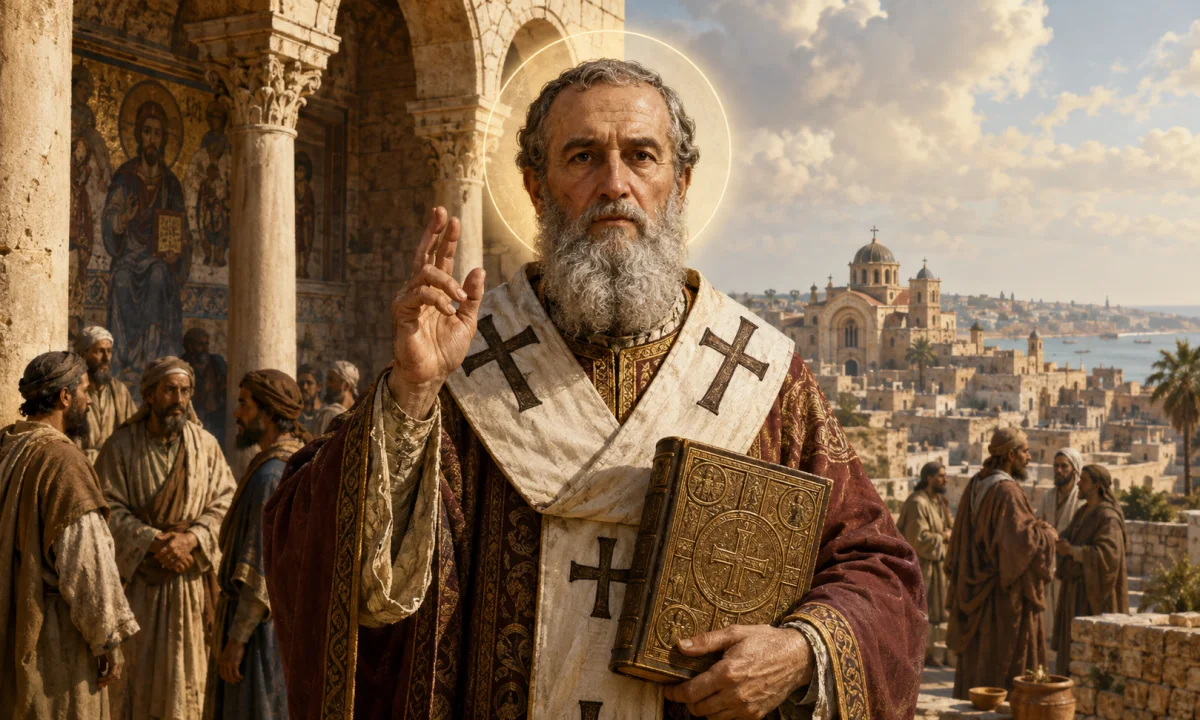
St. Porphyrius, usually identified as Porphyrius of Gaza, was a Christian bishop and ascetic who played an important part in the Christianisation of Gaza in the late fourth and early fifth centuries. He is remembered especially for opposing the city’s ancient pagan cults and for overseeing the destruction of the great temple of Marnas, Gaza’s principal god. His principal feast is commonly observed on 26 February in Eastern Christian traditions.
The saint is also associated with a surviving Greek hagiographical work known as the Life of Porphyrius of Gaza. This text presents him as a holy man, miracle-worker and determined bishop who confronted pagan resistance while protecting and organising the Christian community. The work is an important source for the religious history of late antique Gaza, although, like many saints’ lives, it combines historical information with theological interpretation and miraculous narrative.
Identity and name
The name Porphyrius is the Latinised form of the Greek name Porphyrios, meaning “purple-coloured” or “wearing purple.” English-language sources may use Porphyrius, Porphyrios or, less commonly, Porphyry. The last form can cause confusion because Porphyry of Tyre, the third-century Neoplatonist philosopher, was a different person and was not a Christian saint.
St. Porphyrius of Gaza should also be distinguished from other Christian martyrs named Porphyrius. The most famous of these is Porphyrius the Mime, traditionally described as an actor who converted to Christianity during a performance and was executed under the emperor Aurelian. Some calendars commemorate him on 4 November. The bishop of Gaza belongs to a later period and is remembered primarily as an ascetic bishop rather than as an individual martyr.
Historical and cultural setting
Porphyrius lived during a period when the Roman Empire was becoming increasingly Christian in law, public institutions and imperial patronage. Christianity had gained legal recognition in the fourth century, and emperors increasingly supported bishops and churches. Nevertheless, older religious traditions remained influential, especially in cities with long-established temples, festivals and priesthoods.
Gaza, on the southern Mediterranean coast of Palestine, was one of those cities. It occupied an important position between Egypt, Syria and the lands east of the Jordan. Its population included Christians, Jews and followers of traditional Greco-Roman and local cults. Gaza was especially associated with Marnas, a major god whose name is often understood as “our lord.” His principal sanctuary, the Marneion, stood at the centre of the city’s religious life.
The religious conflict described in Porphyrius’s life was therefore not simply a disagreement between an individual bishop and a few isolated worshippers. It involved competing institutions, public rituals, economic interests and ideas about the identity of the city. For Christians, the destruction or conversion of temples could signify the triumph of the true faith. For supporters of the older cults, those sanctuaries represented ancestral tradition and civic continuity.
Early life and ascetic career
According to the Life of Porphyrius of Gaza, Porphyrius was born in Thessalonica, a prominent city in the Balkans. The text portrays him as coming from a prosperous background, although it does not provide a detailed biography of his family. As a young man, he left ordinary urban life and travelled to Egypt, where he joined the ascetic communities of Scetis.
Scetis, in the western Egyptian desert, was one of the most important centres of early Christian monasticism. Hermits and monks lived there in cells or small communities, pursuing prayer, fasting, manual labour and spiritual discipline. Porphyrius is said to have remained in Scetis for approximately five years.
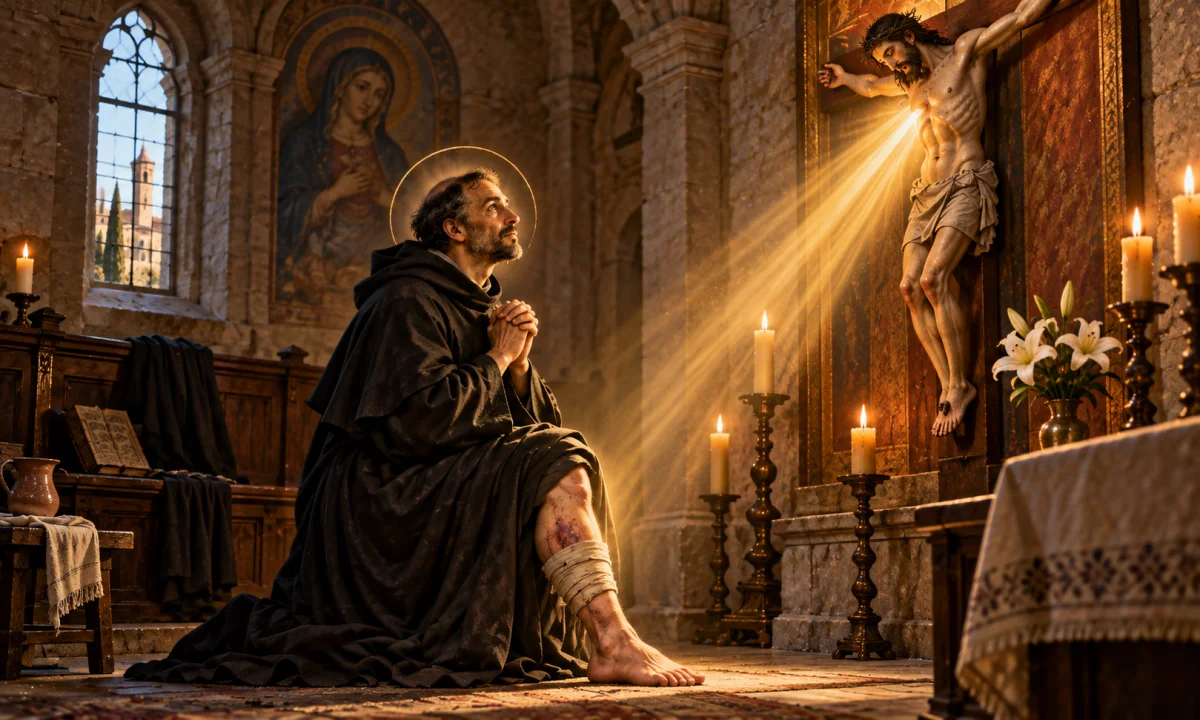
He later travelled to Jerusalem. There he continued an ascetic life, eventually withdrawing to a cave near the Jordan River. The narrative presents this period as one of severe discipline and increasing holiness. He is said to have suffered from illness, particularly a painful condition affecting his legs, but to have continued his religious work despite his physical weakness.
The saint’s illness has an important role in the story. A hagiographical account does not treat illness only as a medical condition; it may also become a setting in which endurance, prayer and divine assistance are demonstrated. Porphyrius’s suffering is therefore presented as part of his spiritual formation rather than as an incidental detail.
Journey to Jerusalem and appointment as bishop
In Jerusalem, Porphyrius became known to John, the city’s bishop. The Life states that John ordained him as a priest and entrusted him with responsibility for the Christian community at Gaza. Porphyrius was then consecrated bishop of Gaza around the end of the fourth century, traditionally in 395.
His appointment placed an experienced ascetic in a difficult episcopal setting. Gaza already had Christians, but they formed a minority in a city where traditional religious practices remained strong. The bishop’s task was not limited to preaching. He had to establish churches, organise clergy, support the poor, defend Christian teaching and negotiate with civic authorities.
The Life presents Porphyrius as personally humble but institutionally forceful. He is depicted as caring for the sick and needy while refusing to accept the continued public dominance of the pagan cults. This combination of charity and confrontation is common in accounts of late antique bishops, who were expected both to imitate Christ’s compassion and to act as guardians of Christian orthodoxy.
The struggle with the cults of Gaza
The central episode in Porphyrius’s traditional biography concerns his opposition to Gaza’s temples. The narrative describes a series of measures intended to weaken or eliminate pagan worship. Christians are said to have appealed to imperial authority, arguing that the continuing activity of the temples threatened the faith and welfare of the Christian population.
In the story, Porphyrius and his allies travelled to Constantinople to seek support from the imperial court. The emperor Arcadius and the empress Eudoxia are associated with the decision to suppress Gaza’s pagan sanctuaries. The account gives Eudoxia a particularly prominent role, describing her as sympathetic to the bishop and responsible for helping obtain the imperial order.
The historical situation was probably more complex than the saint’s life suggests. Imperial legislation against sacrifice and public pagan cults existed, but enforcement varied greatly from place to place. Local officials, civic elites and religious communities could resist, delay or reinterpret imperial policy. The narrative’s emphasis on a direct appeal to the court reflects a familiar pattern in Christian hagiography: a holy bishop overcomes local opposition through the support of a righteous Christian ruler.
According to the traditional account, the Marneion and other temples were eventually closed and destroyed. A church dedicated to the emperor’s patron saint, often identified as the Eudoxiana or Church of the Holy Martyr Irene in different discussions of the episode, was built on the site of the Marneion. The exact architectural and chronological details are not equally secure in all retellings, and the surviving literary account should not be read as a neutral civic record.
The destruction of the Marneion nevertheless has substantial historical importance. Archaeological and literary evidence indicates that the sanctuary was demolished and that a Christian building later occupied the site. The episode illustrates the transformation of urban religious space during late antiquity, when temples were closed, repurposed or replaced by churches.
Miracles and spiritual authority
The Life of Porphyrius attributes various miracles to the bishop. These include healings, protection from danger and divine interventions connected with the suppression of pagan worship. Such stories establish his authority not merely as an administrator but as a holy man whose actions receive heavenly confirmation.
One recurring feature of the narrative is the contrast between Porphyrius’s bodily weakness and spiritual power. Although he suffers from illness and appears physically vulnerable, he is able to endure hardship, travel long distances and confront powerful opponents. This contrast reflects a central Christian ideal of ascetic literature: holiness is measured not by worldly strength but by faith, self-control and dependence on God.
The miracles also serve a broader purpose. They portray the Christian God as more powerful than the gods honoured in Gaza’s temples. This does not provide independent evidence for the events described, but it reveals how Christian writers interpreted religious change. The miracle stories belong to the theological and literary structure of the saint’s life, while the broader process of temple closure must be examined through historical and archaeological evidence.
The surviving life of the saint
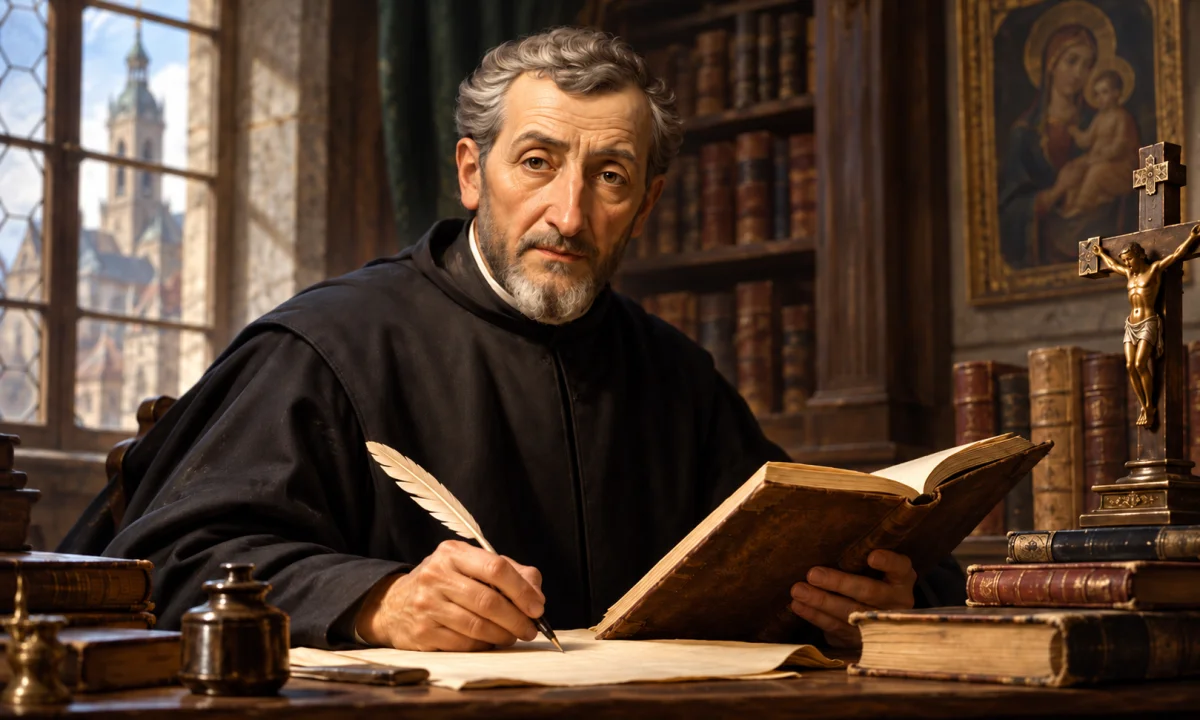
The main written source for Porphyrius is attributed to Mark the Deacon, who presents himself as a companion and disciple of the bishop. The text claims to preserve an eyewitness account of Porphyrius’s activities, including his illness, his appointment as bishop and the conflict over Gaza’s temples.
Scholars have treated the work with both respect and caution. It contains valuable information about Gaza, Christian communities, imperial patronage and the practical difficulties of religious change. At the same time, its style is shaped by the conventions of hagiography. The author’s purpose was to demonstrate Porphyrius’s sanctity and the triumph of Christianity, not to produce a modern chronological biography.
Questions have been raised about the text’s composition, its use of traditional literary motifs and the extent to which Mark’s claimed personal involvement can be verified. These uncertainties do not make the work useless, but they mean that its claims must be distinguished. Some elements may preserve historical memories; others are shaped by theological symbolism, apologetic aims or later editorial development.
Porphyrius’s death is traditionally placed in 420. The account portrays his final years as a period in which the Christian community of Gaza became more firmly established. His burial place and relic traditions have been honoured in later Christian practice, although the precise history of the relics is not equally documented across all traditions.
Religious significance
In Eastern Christianity, Porphyrius is honoured as a bishop, confessor and ascetic. He is not primarily remembered for dying as a martyr. His holiness is associated with steadfast teaching, pastoral responsibility, bodily endurance and the defence of Christian worship in a predominantly non-Christian city.
His story also reflects the changing meaning of episcopal authority. Earlier Christian leaders were often remembered chiefly for martyrdom under pagan emperors. By Porphyrius’s time, bishops could be influential public figures who dealt with imperial officials, supervised construction, contested rival religions and shaped urban life. The saint represents this later form of Christian leadership.
For Christian interpreters, the destruction of the Marneion represents the victory of Christianity over idolatry. Modern historians usually describe the same process in more varied terms, including imperial religious policy, social pressure, competition for urban resources and the changing loyalties of local elites. These interpretations need not erase the religious meaning of the event for believers, but they distinguish devotional interpretation from historical analysis.
Feast and devotional tradition
Porphyrius of Gaza is commonly commemorated on 26 February in Byzantine and Eastern Orthodox calendars. Liturgical texts honour him as a bishop who guided his people, opposed false worship and relied on divine grace despite illness and opposition.
His commemoration is especially connected with the history of Gaza and the wider Christian traditions of Palestine. Churches and monasteries dedicated to saints of Palestine have preserved memories of the region’s bishops, monks and martyrs, even when political upheaval, changing populations and the destruction of religious buildings made continuous local observance difficult.
Iconographic representations of Porphyrius generally follow the conventional appearance of an Eastern Christian bishop: episcopal vestments, a cross and sometimes a Gospel book or blessing hand. There is no single universally fixed portrait. Images may emphasise his office as bishop, his ascetic life or his role in confronting paganism.
Distinction from Porphyrius the Mime
Confusion is most likely with St. Porphyrius the Mime. According to his traditional legend, this Porphyrius was an actor or performer who converted to Christianity while participating in a ritual or theatrical performance before the emperor Aurelian. After publicly declaring his faith, he was executed. He is therefore classified as a martyr and is commemorated separately.
Porphyrius of Gaza was born in a different period and place, became a desert ascetic and served as a bishop. His principal setting is late antique Palestine, while the mime’s story belongs to the age of the Roman persecutions. Similar names do not indicate a family relationship or a shared legend.
Neither saint should be confused with Porphyry of Tyre, the pagan philosopher whose writings criticised Christianity and influenced later Neoplatonism. The similarity between Porphyry and Porphyrius reflects a common ancient name rather than a connection between the figures.
Legacy
Porphyrius of Gaza remains significant because his traditional biography preserves a vivid picture of religious transformation in a late Roman city. It shows Christianity not only as a private faith but also as a force reshaping public buildings, civic identity and relations between local communities and imperial power.
His legacy is therefore interpreted in different ways. Devotional tradition venerates a courageous bishop who brought Christian worship to a city dominated by an ancient cult. Historical study examines the evidence for Gaza’s temples, the policies of Christian emperors and the literary methods used by Mark the Deacon. The saint’s importance lies at the meeting point of these perspectives: he is both a figure of Christian memory and a window into the contested religious world of late antiquity.