WORLD
WORLD
Onoskelis
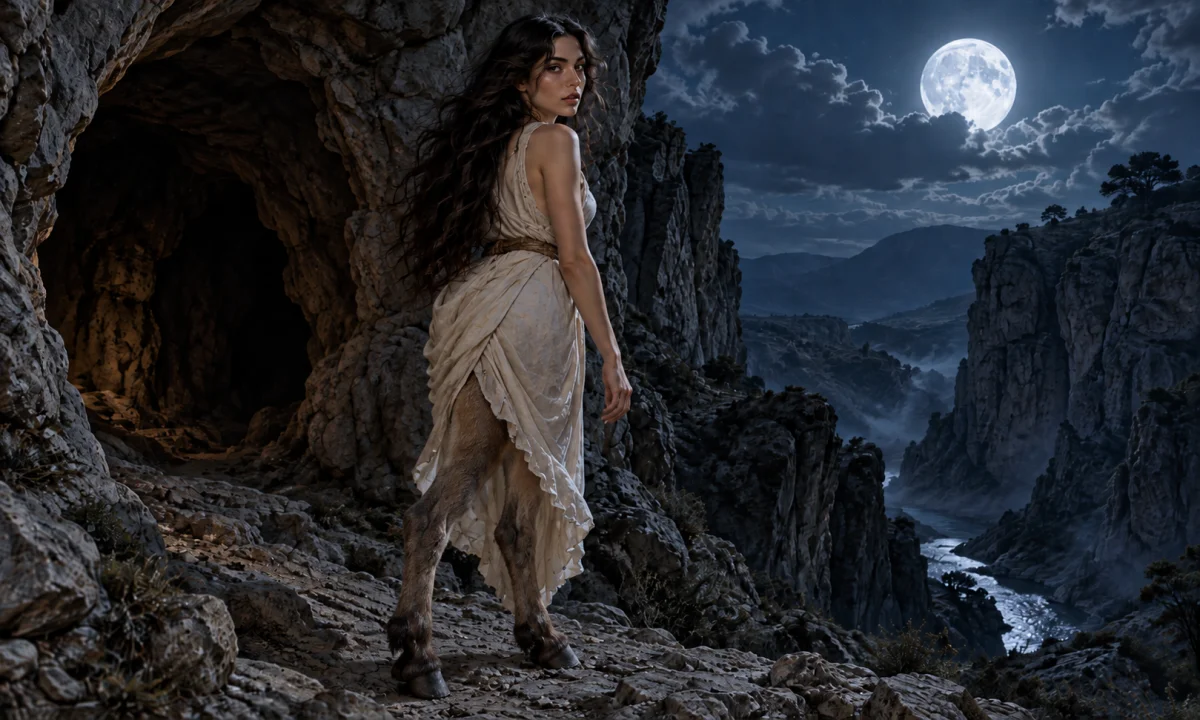
Onoskelis is a female demon described in the Testament of Solomon, a late antique work associated with Jewish and Christian traditions about King Solomon’s power over spirits. Her name is commonly understood as meaning “donkey-legged” or “ass-legged,” and the text presents her as a striking hybrid: she has the attractive form of a woman but the feet of a mule or donkey. She is associated with caves, seduction and the danger of deceptive beauty.
Origins and cultural setting
Onoskelis is known chiefly from the Testament of Solomon, a pseudepigraphal text attributed to Solomon but not regarded as a historical work written by the biblical king. The surviving text recounts how Solomon receives a magical ring from the archangel Michael and uses it to summon, question and command demons involved in the construction of the Temple in Jerusalem.
The work survives in Greek manuscripts and reflects a mixture of Jewish religious ideas, biblical interpretation, ritual traditions and late antique demonology. Its exact date and place of composition remain uncertain. Scholars generally understand it as a composite work that developed over time rather than as a single text produced in one clearly documented period. Because of this, individual demons in the work should not automatically be treated as figures from an earlier, unified system of ancient demonology.
In the world of the Testament of Solomon, demons are questioned about their names, activities, weaknesses and relationships with angels or cosmic powers. Solomon’s authority over them demonstrates the superiority of divinely granted wisdom and ritual knowledge. The work is therefore not simply a catalogue of monsters. Its stories use demons to explore temptation, illness, disorder, astrology, sexuality and the boundaries between human and supernatural powers.
Name and identity
The Greek name Onoskelis is usually interpreted as a compound referring to a donkey or ass and a leg. English translations may use forms such as Onoscelis, Onoskelis or other transliterations. These differences result from the movement of a Greek name into Latin and modern languages; they do not necessarily indicate separate demons.
The name functions both as an identifying label and as a description of her unusual body. Unlike some better-known demons whose names have extensive histories outside a single text, Onoskelis has a relatively narrow ancient textual profile. There is no firm evidence for a widespread independent cult of Onoskelis, a large body of myths about her or a standard religious practice devoted to her.
Her classification also requires care. The Testament of Solomon calls her a demon within its own narrative framework, but ancient Greek and Jewish ideas about spirits did not always follow the modern division between “demons,” “monsters” and “goddesses.” Onoskelis is best described as a female demonic figure in a late antique religious text, rather than as a universally recognized goddess or a major member of a fixed pantheon.
Appearance and attributes
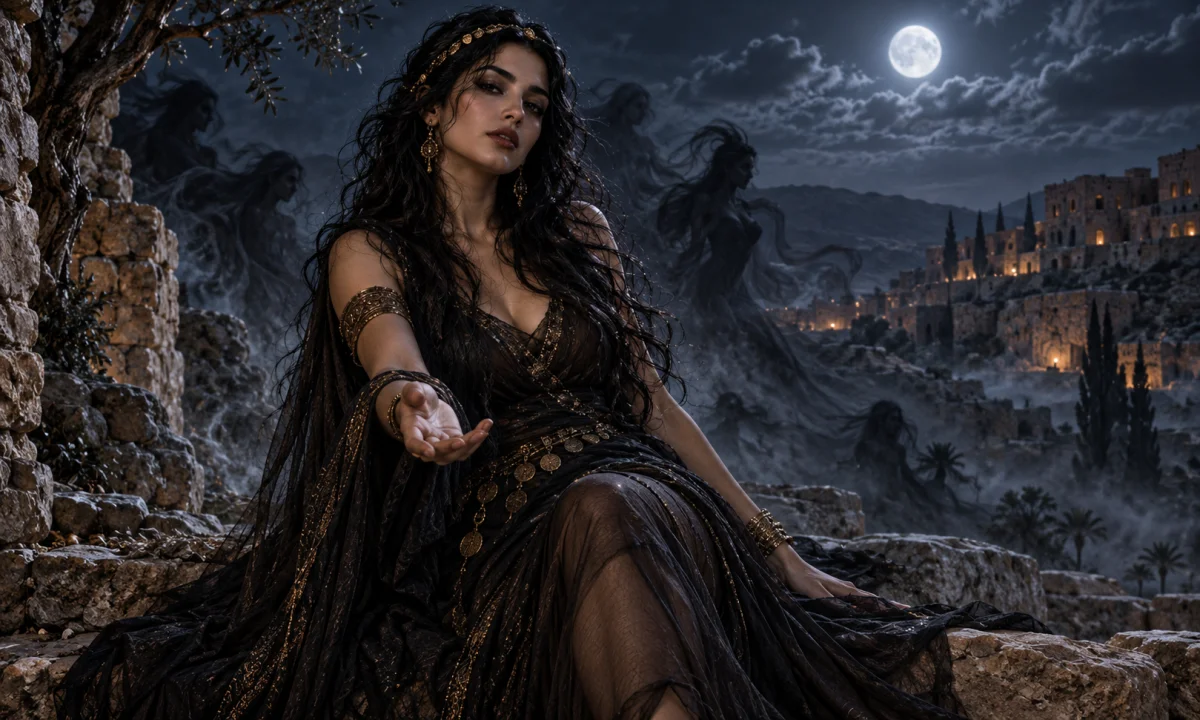
Onoskelis is presented as beautiful in her human appearance, while her mule-like feet reveal her supernatural nature. This contrast is central to her depiction. Her upper form invites trust or desire, but her animal feet expose the deception beneath the surface. The image belongs to a broad tradition of supernatural beings whose attractive appearance conceals danger.
The text associates her with caves. This setting is significant because caves often occupy an ambiguous position in ancient storytelling. They can be places of refuge, initiation and contact with the earth, but they can also be entrances to hidden or threatening realms. A cave-dwelling spirit stands outside ordinary domestic and civic space, reinforcing Onoskelis’s position as a dangerous being from the margins of human society.
Her principal activity is connected with the seduction of men. The surviving descriptions are brief compared with the elaborate biographies given to some other spirits in the Testament of Solomon. Onoskelis is not portrayed through a long sequence of adventures. Instead, her identity is established through a few memorable features: feminine beauty, animal feet, a subterranean dwelling and erotic danger.
These attributes do not mean that every ancient tradition about female spirits with animal characteristics belonged to Onoskelis. The text gives her a particular identity, and similarities with other beings should be treated as comparisons rather than proof of a shared origin.
Onoskelis in the Testament of Solomon
Onoskelis appears during Solomon’s interrogation of the spirits under his authority. Like other demons in the work, she is compelled to identify herself and disclose aspects of her nature. Her confession places emphasis on her beautiful appearance and mule-like feet, creating a deliberately unsettling contrast between attraction and monstrosity.
The episode is less a conventional myth about Onoskelis than a brief demonological encounter. Solomon does not become her companion, enemy or victim in a developed narrative. Instead, he acts as a judge and interrogator who exposes the demon’s identity. The scene contributes to the book’s wider picture of Solomon as a ruler whose divinely sanctioned wisdom extends into the invisible world.
Different translations and editions can vary in wording and in the amount of detail they preserve. The Greek textual tradition is not identical in every manuscript, and modern translations sometimes handle obscure or damaged passages differently. Statements about the precise scope of Onoskelis’s powers should therefore be made cautiously. Her beauty, mule-like feet, cave association and role as a seducing female demon are the most consistent features linked with her name.
Meaning of the hybrid body
Onoskelis’s body expresses a tension between human attractiveness and animal otherness. In many religious and folkloric traditions, hybrid bodies signal that a being does not belong fully to the human world. Animal features may indicate wildness, appetite, impurity, magical power or an origin outside ordinary society. In Onoskelis’s case, the feet are especially important because they are difficult to conceal once her nature has been revealed.
The mule or donkey association may also carry symbolic weight. Donkeys were familiar working animals in the ancient Mediterranean world, but they could be represented in contrasting ways: as humble, stubborn, comic, lowly or physically powerful. The text does not provide a formal explanation of why Onoskelis has these feet, so interpretations should not go beyond the evidence. The animal feature may simply serve as a visual mark of her demonic and deceptive character.
Her seductive role reflects a recurring concern in religious literature: desire can weaken judgement and make a person vulnerable to spiritual harm. Onoskelis does not need a complicated magical arsenal to be threatening. Her power lies in misdirection. She looks human and attractive, but the hidden difference between appearance and reality makes her dangerous.
Relationships and supernatural hierarchy
Onoskelis belongs to the group of spirits summoned and controlled by Solomon, but she is not presented as a member of a clearly documented family of demons. The Testament of Solomon names many individual spirits, yet their relationships are often episodic rather than genealogical. A demon may be linked to a particular illness, temptation, celestial body, angelic opponent or type of human victim without belonging to a stable pantheon.
It is therefore misleading to assign Onoskelis a fixed rank in a later demonological hierarchy. Medieval and modern occult writers sometimes arrange demons into elaborate orders with titles and offices, but those systems should not be projected backward onto the Testament of Solomon. The ancient text gives Onoskelis a recognizable role, not a universally accepted position among infernal rulers.
Nor should she be treated as one of Solomon’s wives, servants or companions. Solomon’s encounter with her is an interrogation within a supernatural trial of authority. The narrative does not establish a continuing personal relationship between them.
Distinction from similar figures
Onoskelis is sometimes compared with several other female or hybrid beings, but these comparisons do not make the figures identical.
- Empousa: In Greek traditions, the empousa is a shapeshifting female apparition associated in some accounts with Hecate and with attacks on travellers or young men. Later descriptions may give her unusual or animal-like legs. Despite these similarities, Onoskelis is a distinct figure identified in the Testament of Solomon.
- Lamia: Lamia is a separate figure from Greek myth and later literary tradition, often connected with predation, sexual danger and the killing or devouring of children. Onoskelis is not simply another name for Lamia.
- Satyrs and fauns: These male nature beings are commonly depicted with animal legs or feet and are associated with wildness and sexuality. Their mythological roles and cultural settings differ from the demonological portrait of Onoskelis.
- Mermaids and other hybrid seducers: Later folklore contains many beings who lure humans through beauty while concealing an animal or supernatural form. Resemblance in motif does not establish a historical connection with Onoskelis.
- Lilith: Lilith belongs to a different and developing body of Jewish folklore concerning a dangerous female night spirit. Later popular writing sometimes groups her with every seductive female demon, but Onoskelis and Lilith have different textual histories.
The most useful distinction is between a shared motif and a shared identity. Beautiful supernatural women, animal feet, caves and sexual danger occur in many traditions. Onoskelis is specifically the figure named and described in the Solomonic text.
Cultural and religious significance
Onoskelis illustrates how late antique religious writing could transform a small descriptive detail into a memorable supernatural character. Her animal feet provide a visible sign that beauty alone cannot be trusted. The episode also reflects the period’s interest in naming and classifying spirits as a way of controlling them. Once Solomon obtains a demon’s name and understands its nature, it becomes subject to his authority.
The figure also reveals the mixed character of the Testament of Solomon. Its supernatural world includes biblical figures, angels, demons, magical procedures, astrological ideas and motifs familiar from wider Mediterranean storytelling. This combination makes the work important for studying the history of religious imagination, but it also makes simple claims about “ancient Greek demonology” or “Jewish demonology” inadequate. Onoskelis belongs to a particular literary environment shaped by several traditions.
There is no strong evidence that ordinary people in antiquity commonly worshipped Onoskelis or treated her as an established household spirit. Her surviving identity is literary and demonological. Any rituals, symbols or prayers assigned to her in modern occult settings should be understood as later creations or reinterpretations unless supported by independent historical evidence.
Later reception
Onoskelis has remained relatively obscure compared with figures such as Lilith, Lamia or the succubus. Her name nevertheless attracts interest in modern studies of demons, ancient magic and hybrid female beings. Contemporary occult lists, fantasy writing, role-playing games and online demon encyclopedias may expand her powers, rank or biography beyond the short description found in the Testament of Solomon.
Such portrayals can make her more prominent, but they should not be confused with the ancient source. The traditional Onoskelis is not known from a large cycle of legends or from a standardized medieval mythology. Her enduring image rests on a compact and vivid combination: a beautiful woman, the feet of a mule, a dwelling in caves and a dangerous power of seduction.