 WORLD

Gaulish mythology
Articles about Gaulish mythology within Europe.
Last articles
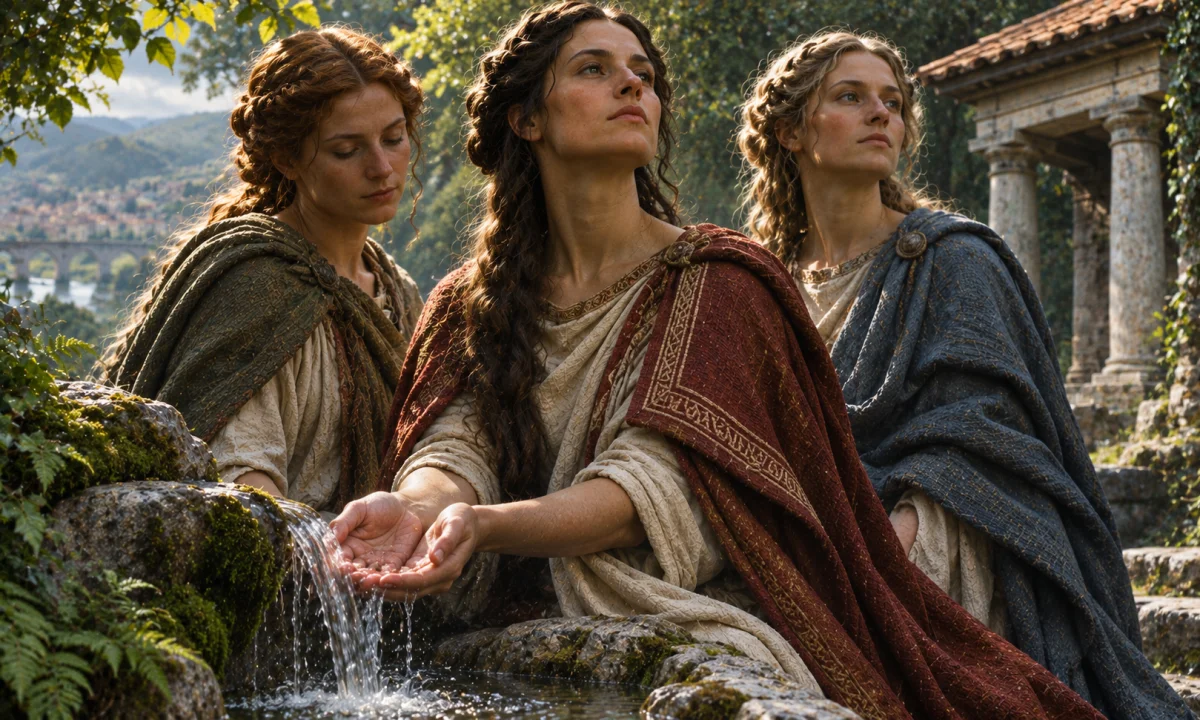
Xulsigiae
Xulsigiae is the name recorded for a group of local goddesses worshipped at Augusta Treverorum, the Roman city now known as Trier in western Germany. Their cult belonged to the religious world of the Treveri, a Celtic-sp…Gaulish mythology: myths, traditions and legends
Gaulish mythology refers to the religious traditions, divine beings, sacred places and inherited narratives associated with the peoples known to Greek and Roman writers as the Gauls. These communities inhabited much of present-day France, Belgium, Luxembourg and Switzerland, as well as parts of northern Italy, western Germany and neighbouring regions. They spoke related Continental Celtic languages, but they did not form one unified nation or maintain a single standardised religion. Individual peoples, towns and regions honoured their own deities, ancestors and local powers, even when they shared names, symbols or ritual practices with other communities.
No complete Gaulish mythological narrative survives in the Gaulish language. Knowledge of Gaulish religion must be reconstructed from inscriptions, sculpture, coins, sanctuaries, offerings, place names and descriptions written by Greek and Roman authors. Much of the evidence dates from the period after the Roman conquest, when local deities were represented through Roman artistic forms and paired with Roman gods. Gaulish mythology is therefore known through fragmentary and transformed evidence rather than through a preserved epic comparable to the Greek or Norse literary traditions.
Gaul, the Gauls and the Celtic world
The Roman term Gaul described a broad geographical and political region rather than one culturally uniform society. Peoples such as the Arverni, Aedui, Sequani, Remi, Parisii and many others possessed their own territories, institutions and religious centres. Alliances and rivalries shifted over time, and local identity remained important even when communities shared related languages and customs.
Gaulish religion belonged to the wider ancient Celtic world, but the label Celtic mythology should be used cautiously. Irish and Welsh mythological literature was written many centuries later in different languages and Christian cultural settings. It may preserve themes inherited from earlier Celtic-speaking societies, yet an Irish god or hero cannot automatically be used to reconstruct a Gaulish deity.
Continental Celtic communities also extended beyond Gaul into Iberia, central Europe, the Balkans and Anatolia. Similar divine names appear across wide areas, but local inscriptions show considerable regional variation. There was no known central authority defining one official Celtic pantheon.
Sources and their limitations
Gaulish religious evidence comes from several distinct sources, each with its own difficulties. Inscriptions provide the names of gods, goddesses and dedicators, but they rarely preserve myths. A short inscription may reveal that a deity received a vow without explaining the being’s origin, personality or full range of functions.
Religious sculpture provides attributes such as animals, tools, clothing and gestures. These images can suggest associations with prosperity, healing, warfare or the natural world, but Roman artistic conventions may obscure earlier Gaulish forms.
Greek and Roman authors describe Gaulish customs from outside the culture. Julius Caesar’s account of Gaulish religion is important but politically shaped by his role as conqueror. He explains Gaulish gods through Roman names, a practice known as interpretatio romana, rather than preserving their original identities in detail.
Later Roman poets and historians sometimes emphasised violence, strange rituals or supposed barbarism. Their reports may contain genuine information, but they also reflect literary convention and imperial prejudice. Archaeological evidence can confirm practices such as offerings and sanctuary use, yet it cannot always verify the motives assigned by ancient writers.
Interpretatio romana and divine identity
Under Roman rule, Gaulish deities were frequently paired with Roman gods. Inscriptions refer to combinations such as Mercury with a local name, Mars associated with a regional deity or Apollo linked with healing springs. These pairings did not necessarily mean that the two gods were believed to be completely identical.
The Roman name could provide an official public category for a deity whose local identity remained important. A god paired with Mars might be connected with protection, tribal authority, healing or territory rather than warfare alone. Similarly, a deity called Mercury by Roman writers could possess functions extending beyond trade and communication.
Different Gaulish gods could be associated with the same Roman deity in different regions. This demonstrates that interpretatio romana was flexible. It translated local divine powers into a language understandable within the Roman Empire while preserving local names and cults.
Modern descriptions that simply call a Gaulish deity the Celtic version of a Roman god therefore conceal more than they explain. The original identity must be reconstructed from the local inscription, location, imagery and historical setting.
Local gods and regional cults
Many Gaulish deities were closely connected with particular communities, rivers, mountains, forests, springs or towns. Their authority may have been territorial rather than universal. A deity known from one sanctuary cannot automatically be assumed to have been worshipped throughout Gaul.
The goddess Sequana was honoured at the source of the River Seine. Worshippers deposited sculptures and anatomical offerings there, probably in connection with healing and divine assistance. Her cult was rooted in a specific river and sacred landscape.
Nemausus was associated with the sacred spring around which the city of Nemausus, modern Nîmes, developed. Other divine names survive only in one or two inscriptions, suggesting highly local traditions or simply the uneven survival of evidence.
This emphasis on place means that Gaulish religion cannot be reduced to a short list of major gods. Rivers, springs, settlements and ancestral territories could each possess sacred powers approached through local ritual.
Lugus and the problem of reconstruction
Lugus is one of the most widely discussed Gaulish deities, although direct evidence for his mythology is limited. His name is reflected in ancient place names such as Lugdunum, the name of several settlements, including Roman Lyon. The exact meaning of these place names and the character of Lugus remain debated.
Scholars often compare Lugus with the Irish Lugh and Welsh Lleu because of linguistic relationships between their names. The medieval Insular figures are associated with skill, sovereignty and extraordinary ability. These comparisons may preserve elements of a shared Celtic inheritance, but the much later Irish and Welsh stories cannot be transferred directly to ancient Gaul.
Roman writers described a Gaulish god they identified with Mercury as especially important. Some scholars connect this unnamed deity with Lugus, but the identification is plausible rather than certain in every context.
Lugus may have possessed associations with mastery, exchange, authority or multiple skills. The surviving Gaulish evidence is not sufficient to reconstruct a complete biography or standard set of attributes.
Cernunnos and horned imagery
Cernunnos is known from a small but influential body of evidence. His name appears clearly on the Pillar of the Boatmen from Roman Paris, beside an image of a male figure with antlers. Other ancient images depict antlered or horned figures, sometimes seated cross-legged and accompanied by animals, torcs or serpent-like creatures.
The famous Gundestrup Cauldron includes a horned figure holding a torc and a serpent, although the vessel was found in Denmark and its precise cultural origin remains debated. The figure is often identified as Cernunnos, but no inscription confirms the name.
Cernunnos is frequently described in modern writing as a universal Celtic god of nature, animals, fertility or the underworld. These interpretations draw from visual associations but go beyond what the ancient evidence directly states.
The antlers may connect the figure with wild animals, renewal, status or power. The torc may signify wealth and authority. Cernunnos was clearly significant in some settings, but his mythology, relationships and geographical reach remain uncertain.
Epona and the sacred horse
Epona was a goddess associated with horses, ponies, mules and those who worked with them. Her cult originated in a Celtic-speaking environment but spread widely through the Roman Empire, especially among cavalry units and people dependent on transport animals.
Images often show Epona seated beside horses, riding a horse or holding objects associated with nourishment and prosperity. Her name is related to a Celtic word for horse, making her animal connection unusually clear.
Epona’s worship demonstrates how a local or regional deity could gain importance within imperial institutions. Roman soldiers carried her cult far beyond Gaul, and she received recognition within Roman religious life.
Modern portrayals sometimes define her as a goddess of sovereignty, fertility or the journey to the afterlife. These interpretations may be suggested by comparative evidence and imagery, but the surviving inscriptions identify her most securely through her association with horses and their protection.
Taranis, thunder and celestial power
Taranis is named by the Roman poet Lucan as one of several Gaulish gods. His name is related to a Celtic term for thunder, supporting an association with storms and celestial power. Inscriptions and images also suggest the existence of thunder or wheel deities in parts of Gaul.
A male figure holding a wheel and sometimes a thunderbolt is commonly interpreted as a Gaulish sky or thunder god influenced by Roman Jupiter imagery. Some examples are identified as Jupiter with local attributes rather than explicitly named Taranis.
The wheel may represent thunder, the sun, celestial movement or sovereignty, but its meaning was probably not identical in every image. Modern claims that Taranis possessed a fixed sacred wheel symbol throughout the Celtic world are more certain than the evidence allows.
Comparisons with other Indo-European thunder gods can illuminate broad patterns, yet they do not provide a lost Gaulish myth unless supported by direct evidence.
Toutatis, Esus and uncertain functions
Lucan also names gods written in Latin as Teutates or Toutatis and Esus. These figures became famous through later interpretations, but little direct narrative evidence survives.
The name Toutatis is commonly connected with a word meaning people or tribe. It may have functioned as a title meaning something like god or protector of the people rather than as one divine personal name. Inscriptions contain related forms associated with different regions.
Esus appears on the Pillar of the Boatmen cutting branches from a tree. Another part of the monument depicts a bull with cranes, labelled Tarvos Trigaranus. The relationship between these scenes is not fully understood, and no surviving text explains the story behind them.
Ancient authors associated these gods with forms of sacrifice, but their reports are late, literary and difficult to evaluate. Their true functions cannot be reduced confidently to modern labels such as god of war, agriculture or death.
Matres, Matronae and collective goddesses
Groups of female deities known as the Matres or Matronae were widely honoured in Gaul and neighbouring provinces. Their names mean mothers or matrons, and images commonly show three seated women holding fruit, bread, infants or containers.
These goddesses were associated with fertility, nourishment, family, protection and community prosperity. Many inscriptions add local or regional titles, indicating that different groups of Matres belonged to particular peoples or places.
The frequent group of three does not prove the existence of one universal Celtic triple goddess. Groups of three were common in ancient religious imagery, and the Matres represented many distinct cults rather than one single deity with three fixed aspects.
Their popularity reveals the importance of collective female divine powers within domestic, civic and regional religion. They were worshipped by both civilians and soldiers across culturally mixed areas of the Roman provinces.
Healing gods and sacred waters
Springs, wells and thermal waters were major centres of Gaulish religious practice. Deities associated with healing often retained local names while being paired with Roman Apollo, Minerva or other gods.
Grannus was widely worshipped as a healing god and frequently identified with Apollo. His sanctuaries were associated in several regions with thermal springs. Sirona, a goddess linked with healing and water, was sometimes paired with Apollo Grannus and depicted with eggs or a serpent.
Borvo or Bormo was another deity associated with hot springs, reflected in several ancient place names. Damona appears in inscriptions as a divine partner of healing gods in certain local cults.
Anatomical offerings representing eyes, limbs or other body parts have been found at some sanctuaries. These objects probably expressed requests for healing or gratitude, although individual deposits cannot always be interpreted with certainty.
Sucellus, Nantosuelta and prosperity
Sucellus is commonly depicted as a bearded male figure carrying a long-handled mallet and sometimes a vessel. His name is often interpreted as meaning good striker, though the exact significance of the mallet remains debated.
He has been associated with agriculture, wine, forests, protection and prosperity. These interpretations arise from his objects and cult settings, but no surviving Gaulish narrative explains his complete role.
Nantosuelta appears in inscriptions as Sucellus’s companion in some regions. She may be shown with a long staff topped by a small house-like object, together with symbols connected with domestic abundance or the underworld.
The pair illustrates how Gaulish deities could be worshipped through regional partnerships. Their modern classification as simple gods of agriculture or household prosperity cannot capture every aspect of their identities.
The sacred head and human imagery
Human heads appear prominently in Gaulish and wider Celtic art. Ancient writers also describe warriors taking the heads of defeated enemies. Archaeological discoveries at some settlements and sanctuaries indicate that human skulls could be displayed or deposited ritually.
Scholars have often spoken of a Celtic cult of the head, suggesting that the head was regarded as the centre of identity, vitality or spiritual power. The repeated imagery supports the importance of heads, but it does not prove one universal doctrine shared by all Celtic peoples.
Stone heads may represent gods, ancestors, defeated enemies or protective beings. Without inscriptions or archaeological context, their identity is often uncertain. Modern claims that every carved head portrays a specific deity are rarely justified.
Druids and religious authority
Druids are described by Greek and Roman authors as religious specialists, teachers, judges and advisers. Caesar presents them as a learned class responsible for ritual, education and legal decisions. He also claims that their training involved long periods of memorisation and that they avoided committing sacred teachings to writing.
These reports indicate that oral learning held an important role, but Roman descriptions may organise Gaulish society according to foreign expectations. The druids were probably not one centralised priesthood governing every Celtic community.
Other specialists mentioned in ancient sources include poets, diviners and seers. The relationships among these roles varied, and later Irish social categories cannot be transferred unchanged to ancient Gaul.
Modern Druid movements developed from early modern antiquarianism, Romanticism and contemporary religious revival. They may draw inspiration from ancient evidence, but they are not direct institutional continuations of the Gaulish druids.
Sanctuaries, offerings and ritual practice
Gaulish religious activity took place in natural settings, enclosed sanctuaries, settlements and later Gallo-Roman temples. Sacred groves are mentioned by ancient writers, while archaeology has identified ritual enclosures and structures used for offerings and communal ceremonies.
Weapons, coins, jewellery, animal remains and other objects were deposited in rivers, lakes, pits and sanctuaries. Valuable objects were sometimes deliberately bent, broken or otherwise removed from ordinary use before deposition.
Animal sacrifice and ritual feasting are supported by archaeological evidence. The species selected and treatment of remains varied according to sanctuary and occasion. Offerings formed relationships among worshippers, communities and divine powers rather than functioning only as gifts intended to purchase favour.
Roman-style temples became common after conquest, but local practices continued within them. Architectural change did not necessarily mean the immediate replacement of Gaulish gods by Roman religion.
Human sacrifice and ancient accusations
Greek and Roman authors claim that Gaulish communities practised human sacrifice. Caesar describes large constructions filled with victims and burned, an image later popularised as the wicker man. Other writers associate particular gods with specific methods of killing.
These accounts cannot be accepted without criticism because they were written by outsiders and often supported portrayals of conquered peoples as barbaric. The wicker-man description has not been confirmed as a standard Gaulish ritual by direct archaeological evidence.
Some archaeological discoveries indicate that human beings were killed or their remains treated in ritualised ways at certain Iron Age sites. However, it can be difficult to distinguish sacrifice from execution, warfare, funerary treatment or post-battle display.
Human sacrifice may have occurred in some contexts, but its frequency, meaning and regional distribution remain uncertain. It should neither be denied automatically nor treated as the defining feature of Gaulish religion.
Death, ancestors and the otherworld
Burial evidence shows considerable variation across Gaul. Cremation and inhumation were both practised, and graves might include weapons, jewellery, vessels, food or vehicles. These objects suggest beliefs concerning status, memory and continued existence, but they do not reveal one complete doctrine of the afterlife.
Caesar reports that druids taught that the soul did not perish and passed after death into another body. His statement has often been interpreted as belief in reincarnation. The description may preserve a genuine doctrine, but its exact meaning and distribution cannot be reconstructed confidently.
Later Irish and Welsh stories describe richly imagined otherworlds, but these medieval narratives cannot serve as direct descriptions of Gaulish belief. Comparisons may suggest broader Celtic themes involving supernatural feasting, heroic dead or journeys beyond the human world, yet the Gaulish evidence remains fragmentary.
Ancestor veneration may have been important within families and communities, particularly where tombs, lineage and territorial authority were connected. Specific practices varied and are difficult to separate from Roman funerary customs after conquest.
Roman conquest and religious transformation
The Roman conquest changed Gaulish political and religious institutions. Some sanctuaries were destroyed or abandoned, while others continued or were rebuilt in Roman architectural forms. Local elites increasingly expressed religious identity through Latin inscriptions and participation in imperial cults.
Gaulish gods did not disappear immediately. Their names remained visible in dedications, sometimes paired with Roman deities. Local communities continued to honour rivers, springs, healing powers and regional protectors within the new imperial system.
Christianity spread gradually through Roman Gaul and eventually challenged both traditional cults and Roman public religion. Temples were closed, transformed or abandoned, while some sacred places acquired Christian associations.
Claims that every Christian saint, festival or holy well directly replaced a Gaulish god are too simplistic. Continuity occurred in some places, but conversion involved many processes, including institutional change, reinterpretation, local memory and the creation of new religious traditions.
Modern reconstruction and popular culture
Gaulish mythology is frequently reconstructed as a complete pantheon modelled on Greek or Norse mythology. Modern charts may assign each deity one fixed domain, family relationship and set of powers. The ancient evidence rarely supports this level of certainty.
Nationalist and Romantic movements have also portrayed the Gauls as the direct cultural ancestors of modern nations. Ancient Gaul contained diverse peoples, and modern national identities cannot be projected straightforwardly onto them.
Comics, novels, games and modern Pagan traditions have given Gaulish gods new visibility. These interpretations may use authentic names and archaeological imagery while filling gaps through comparison, creativity or religious experience.
Gaulish mythology remains significant precisely because its evidence reveals a religious world rooted in local communities, sacred landscapes and adaptable divine identities. Its surviving gods emerge through inscriptions, images and ritual places rather than continuous myths, requiring careful distinction between ancient evidence, scholarly reconstruction and modern imagination.