WORLD
WORLD
Bifrons
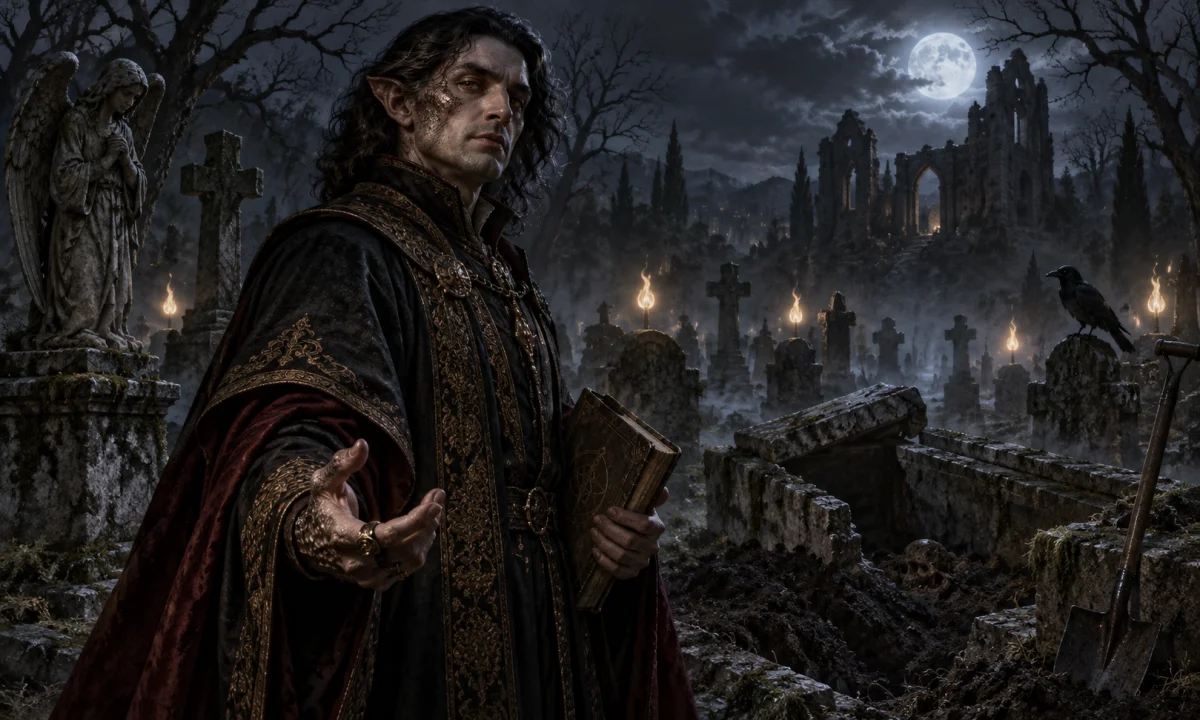
Bifrons is a demon listed in the Ars Goetia, the first section of the early modern grimoire known as the Lesser Key of Solomon. He is described as a great earl who teaches astrology, geometry and other branches of knowledge, while also performing disturbing rites involving the dead. Bifrons is not a figure from ancient mythology or a universally recognised religious tradition; his surviving profile belongs primarily to European Christian demonological literature of the Renaissance and early modern period.
Origins in European demonology
The best-known account of Bifrons appears in the Ars Goetia, a seventeenth-century compilation of magical and demonological material. The work presents a hierarchy of seventy-two spirits, each assigned a rank, a number of infernal followers, a seal and particular powers. Bifrons is named as the forty-sixth spirit in the standard sequence.
The Ars Goetia did not emerge in isolation. Its catalogue reflects older traditions of Christian demonology, ceremonial magic and spirit lists that circulated in manuscript and print. Related material appears in Johann Weyer’s Pseudomonarchia Daemonum, published in 1563, although the wording, ordering and details are not identical in every source. The names of demons were copied, adapted and sometimes corrupted as they passed between languages, manuscripts and editions.
These texts were produced in a culture that treated magic, astrology and the summoning of spirits as matters of religious and legal controversy. Christian theologians commonly regarded such spirits as demons or fallen angels, while learned occultists attempted to organise them according to ranks resembling those of earthly courts or military systems. Titles such as king, duke, marquis, president and earl therefore reflect the hierarchical language of European society as much as any consistent supernatural government.
There is no reliable evidence that Bifrons was worshipped as an independent deity in antiquity, nor that he belongs to a continuous pre-Christian cult. His documented identity begins with early modern demonological catalogues.
Name and identity
The name is usually written Bifrons. Some editions and later occult lists preserve variant spellings, including forms such as Bifrovs. These differences are typical of grimoire transmission, in which unfamiliar names could be copied by hand, transliterated from another language or altered by printers.
Bifrons is sometimes connected by modern writers with the Latin word bifrons, meaning “two-faced” or “two-fronted.” The resemblance is suggestive, especially because the figure is associated with transformation and the dead, but it does not establish the origin of the name. The demonological texts do not clearly explain the name’s etymology, and there is no firm evidence that Bifrons is an ancient form of the Roman god Janus or any other classical figure.
The name should therefore be treated as part of a later demonological tradition rather than as proof of a direct link to Roman religion. Similar-looking names can arise through coincidence, scribal alteration or the borrowing of learned Latin vocabulary.
Rank and place in the Goetic hierarchy
In the standard Ars Goetia description, Bifrons is a great earl. The title places him among the aristocratic ranks of the spirit catalogue, although the texts do not provide a consistent explanation of how an earl differs in authority from a duke, marquis or count.
He is said to command twenty-six legions of spirits. In ceremonial magic, a legion is a conventional measure of infernal followers rather than a quantity that can be independently verified. Such numbers contribute to the catalogue’s image of a vast and ordered supernatural court.
Like many figures in the Ars Goetia, Bifrons is associated with a seal used in ritual manuscripts. The seal is a symbolic design intended to identify or constrain the spirit within the logic of the magical operation. Its presence demonstrates the practical, ritual character of the grimoire, but it is not evidence of an ancient symbol independently connected with Bifrons.
Appearance and transformation
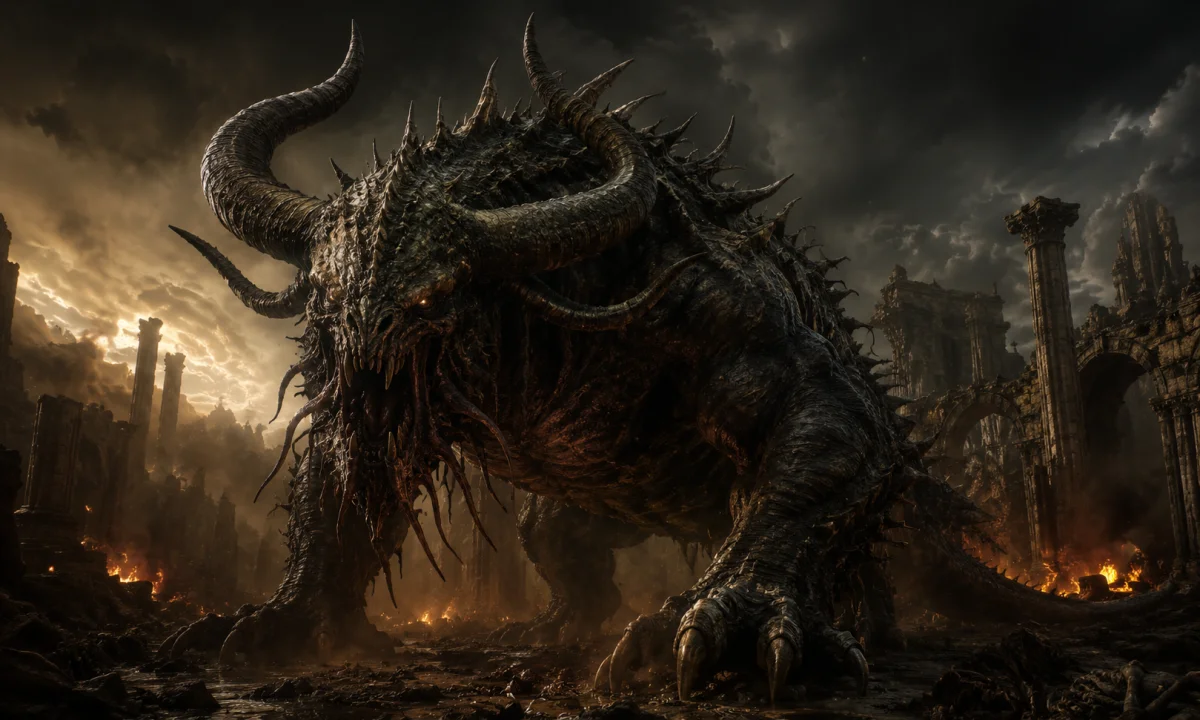
Bifrons is said to appear first in the form of a monster and later to change into the shape of a man. The text does not give a detailed anatomical description of the monstrous form. Consequently, there is no single traditional appearance comparable to the well-developed visual identities of figures such as the dragon, vampire or centaur.
The movement from monstrous form to human form is one of the most notable features of his entry. It may reflect a recurring pattern in demonological literature: a spirit initially reveals an alarming or non-human nature, then adopts a form more suitable for communication with a human practitioner. The transformation can also be read symbolically as a contrast between hidden supernatural power and the appearance of rational, teachable knowledge.
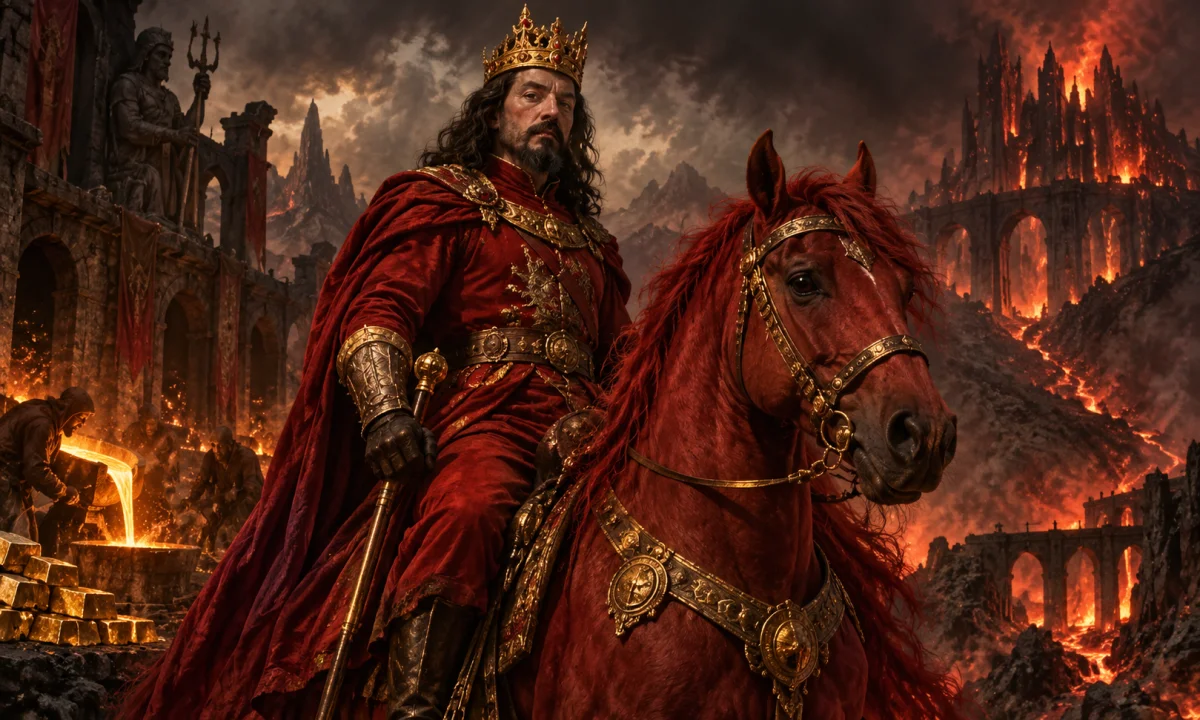
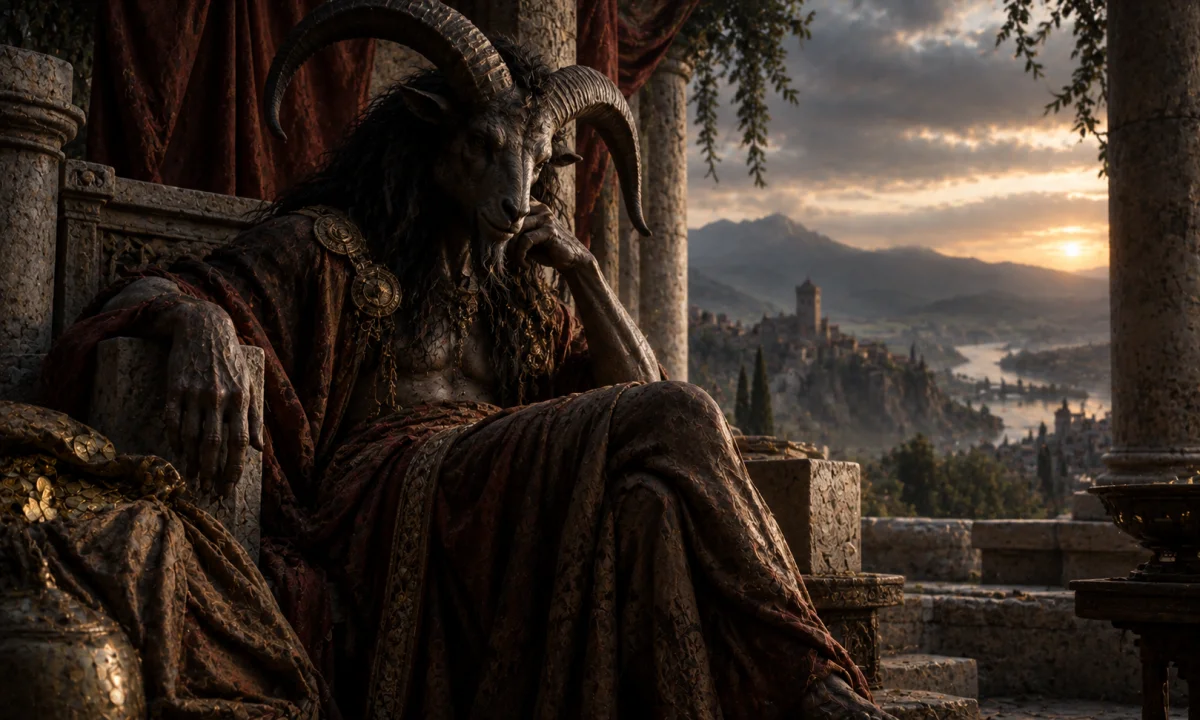
Modern illustrations often give Bifrons horns, wings, claws, a bestial body or a skull-like face. These features are artistic inventions or later extrapolations unless they are specifically presented as an illustrator’s interpretation. The original descriptions do not establish a fixed visual design.
Knowledge of astrology and geometry
Bifrons’ principal intellectual role is the teaching of astrology and geometry. He is also credited with teaching other arts and sciences. This combination is significant within the learned culture that produced the grimoires. Astrology and geometry were respected scholarly disciplines in early modern Europe, even though their methods and status differed from those of modern astronomy and mathematics.
Astrology was understood by many educated people as a system for interpreting relationships between celestial movements and earthly events. Geometry was associated with measurement, proportion, architecture and mathematical reasoning. By presenting Bifrons as a teacher of these subjects, the text gives him a role that is not limited to violence or temptation. He represents forbidden or ambivalent knowledge: useful learning placed under the authority of a demon.
The phrase “other arts and sciences” is broad and does not specify a curriculum. It should not be expanded into claims that Bifrons traditionally taught every form of occultism, medicine, alchemy or modern science. Those associations may appear in later interpretations, but they are not clearly stated in the core description.
Dealings with the dead
Bifrons is also associated with cemeteries and corpses. The Ars Goetia says that he changes dead bodies from one sepulchre to another. The wording suggests the supernatural displacement or rearrangement of corpses rather than resurrection in the theological sense. Bifrons is not described as restoring the dead to ordinary life, raising a particular person from death or ruling over the dead as a god or king.
He is further said to light candles upon the sepulchres of the dead. This image combines Christian funerary practice with the unsettling presence of a demon in a burial place. Candles could represent prayer, remembrance, vigil or sacred light, but in Bifrons’ context the act is presented as a strange supernatural service rather than a recognised Christian rite.
The cemetery imagery helps distinguish Bifrons from spirits whose powers concern warfare, wealth, seduction or political influence. It also creates a sharp contrast with his scholarly abilities. He is at once a teacher of abstract knowledge and a figure connected with graves, corpses and the disruption of burial spaces.
Symbolism and interpretation
Bifrons can be interpreted as a figure of boundaries. His reported activities connect several oppositions: human and monstrous appearance, learning and transgression, life and death, orderly geometry and disturbed graves. These contrasts may explain why later occult writers and artists find the character visually and symbolically attractive.
It is important, however, to distinguish interpretation from documented belief. The early texts do not present a developed mythology explaining Bifrons’ birth, family, former angelic identity or place in a cosmic rebellion. Later demonology sometimes treats all named demons as fallen angels or associates them with Satanic hierarchies, but Bifrons’ individual entry does not provide a biography of that kind.
Nor does the text identify him as a psychopomp in the same sense as figures whose primary function is to guide souls to the afterlife. His connection with graves concerns the movement of corpses and the lighting of candles, not a clearly defined duty to escort souls. Describing him as a “lord of the dead” therefore goes beyond the most securely documented material.
Relationship to other figures
Bifrons should not be confused with Janus, the Roman god traditionally associated with doorways, transitions and two faces. The possible resemblance between bifrons and the Latin idea of being two-faced has encouraged comparison, but no direct historical identification is established.
He is also distinct from Baron Samedi, a later Haitian Vodou spirit associated in popular descriptions with cemeteries and the dead. Bifrons belongs to European grimoire demonology, while Baron Samedi belongs to a different religious and cultural tradition shaped by West African, Catholic and Caribbean histories. A shared association with graves does not make the two figures equivalent.
Likewise, Bifrons is not the same as a generic necromancer, cemetery ghost or undead creature. His profile comes from a catalogue of summoned spirits, and his powers combine teaching with the manipulation of burial places. Treating every grave-associated supernatural being as Bifrons erases important differences between religious traditions and fictional categories.
Historical and religious context
Early modern demonological catalogues were part of a wider debate about the boundaries between legitimate religion, natural philosophy and forbidden magic. Some authors wrote about demons to condemn magical practices; others incorporated demon names into ritual systems that claimed to control or negotiate with spirits. The same catalogue could therefore be read as a warning, a magical manual or a literary compilation, depending on the reader and context.
Descriptions such as Bifrons’ teaching of astrology and geometry reflect the period’s interest in classifying supernatural beings according to their supposed areas of expertise. Demons were often imagined as possessing extensive knowledge but using it in morally dangerous ways. Their learning did not make them benevolent. In Christian demonological thought, a spirit could know truths about the natural world while still being regarded as spiritually deceptive or rebellious.
The cemetery elements also belong to a broader European fear of improper interference with burial and the dead. Christian burial practices placed moral and social importance on the grave. Moving corpses without permission, disturbing tombs or using funerary objects in magical rites could be understood as both a religious offence and a threat to communal order. Bifrons’ actions dramatise that anxiety in supernatural form.
Later occult and popular reception
Since the nineteenth century, editions and adaptations of the Ars Goetia have circulated among ceremonial magicians, occult historians and readers interested in demonology. Bifrons is generally retained as the forty-sixth spirit, with his rank, twenty-six legions, scholarly instruction and cemetery-related powers repeated in abbreviated form.
Later occult systems sometimes assign additional colours, planetary correspondences, incense, stones or elaborate personality traits to Bifrons. Such additions do not form part of a single ancient tradition and may vary from one modern author to another. They should be identified as later magical correspondences rather than original attributes.
Bifrons also appears occasionally in fantasy literature, role-playing games, illustrated demon encyclopaedias and other popular media. These adaptations often emphasise his monstrous appearance, command of the dead or association with forbidden knowledge. Fictional portrayals may give him a personal history, distinctive weapons, alliances or supernatural powers absent from the grimoires. They are creative reinterpretations, not evidence for an older mythology.
The most securely documented Bifrons remains the relatively brief figure of the early modern demonological catalogues: a great earl, initially monstrous in appearance, capable of assuming human form, associated with astrology and geometry, and linked to the movement of corpses and candles in burial places.