WORLD
WORLD
Astaroth
Astaroth is a demon of European Christian demonology, best known from early modern manuals of magic and the tradition commonly called the Ars Goetia. The name is connected historically with the ancient Near Eastern goddess Astarte and with the biblical form Ashtoreth, but the demon Astaroth is not simply the ancient goddess under another name. Over time, biblical polemic, Jewish and Christian interpretations of foreign deities, medieval demonology and later occult literature reshaped the name into that of a male-presenting infernal spirit.
Origins and cultural setting
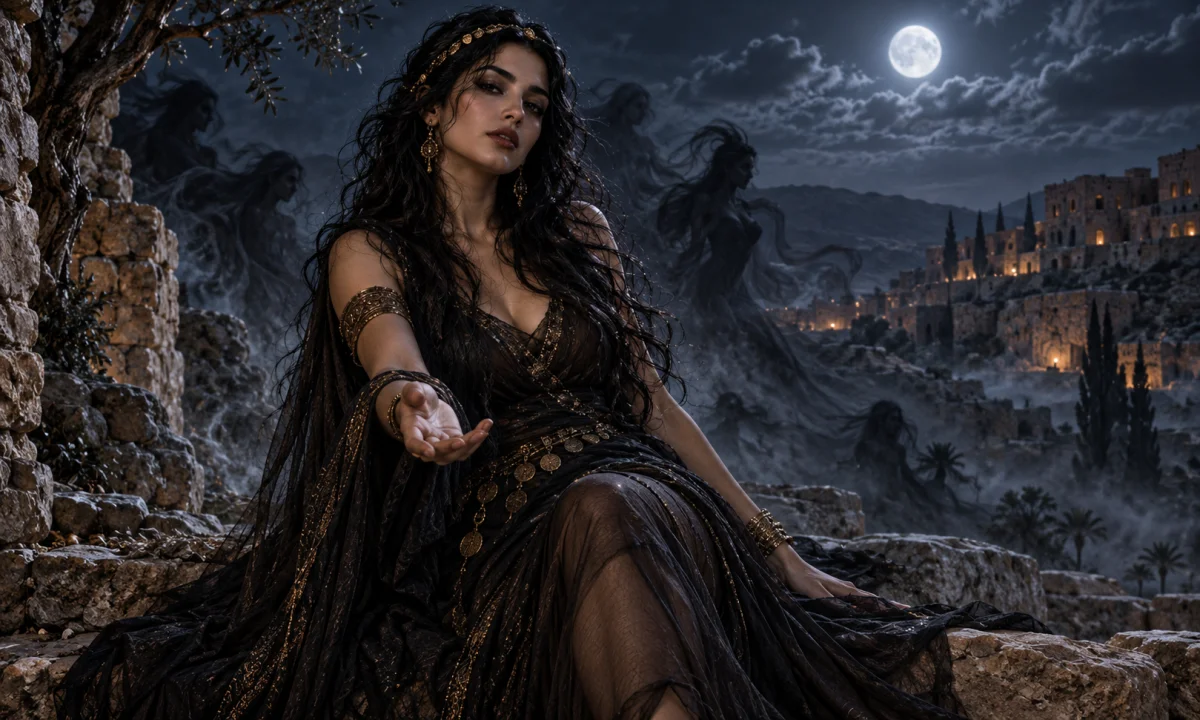
The background to Astaroth lies in the religious cultures of the ancient Levant. Astarte was a major goddess worshipped under related names in places including Syria, Phoenicia and the wider eastern Mediterranean. She was associated in different local traditions with fertility, sexuality, kingship, war and celestial symbolism. Her precise attributes varied according to region and period, and she should not be treated as a single, uniform figure across all ancient societies.
The Hebrew Bible refers to Ashtoreth as a foreign goddess or as part of the religious practices condemned by Israelite writers. The form “Ashtoreth” is widely understood by scholars as a Hebrew rendering related to the name Astarte. A longstanding explanation is that the consonants associated with Astarte were combined with vowel patterns connected with the Hebrew word bosheth, meaning “shame,” as part of a polemical practice. The details of the name’s development are debated, however, and the biblical form should not be assumed to preserve a complete description of the goddess’s original worship.
In biblical and later Christian interpretation, foreign gods were often recast as idols, false gods or demons. This did not mean that every ancient deity became a distinct demon with a continuous and clearly documented identity. Rather, names could be reused in new religious and literary contexts. Astaroth emerged from this process of reinterpretation, drawing on the sound and reputation of Ashtoreth and Astarte while acquiring characteristics that belong specifically to Christian demonological literature.
The name Astaroth
The spelling Astaroth is associated with Latin and later European forms of the name. It may reflect the plural or collective-looking form of the biblical name Ashtoreth, although the history of the spelling is not entirely straightforward. In some early contexts, names derived from Ashtoreth or related terms could refer to a goddess, a group of deities or an idol rather than to one standardized demon.
Medieval and early modern writers increasingly treated Astaroth as an individual male demon. This grammatical and gendered shift is significant. The ancient goddess Astarte was generally feminine, while the Astaroth of European demonology is usually described with masculine titles such as duke or prince. The change may have been encouraged by the form of the name, by the tendency of demonological catalogues to assign rank and gender to spirits, and by the Christian habit of transforming pagan gods into demons.
There is therefore no simple historical chain in which the goddess Astarte gradually “became” Astaroth without alteration. The relationship is one of reinterpretation and name inheritance, not a continuously documented survival of an unchanged cult or personality.
Astaroth in demonological catalogues
Astaroth became especially prominent in European demonology during the sixteenth and seventeenth centuries. One important work is Johann Weyer’s Pseudomonarchia Daemonum, published in 1577 as an appendix to his De praestigiis daemonum. Weyer catalogued demons according to ranks, offices and powers, treating them as part of a learned Christian discussion of magic, temptation and spiritual deception.
Astaroth also appears in the Ars Goetia, the first section of the compilation commonly known as the Lesser Key of Solomon. The compilation survives in manuscripts from the seventeenth century and later, although its materials draw on earlier magical and demonological traditions. In the Goetic hierarchy, Astaroth is described as the twenty-ninth spirit and as a great duke.
These texts are not eyewitness records or neutral descriptions of an independently observed supernatural being. They are products of Christian magical literature, manuscript transmission and learned folklore. Their descriptions also vary in wording, ordering and detail. Astaroth’s best-known attributes come from this textual tradition rather than from ancient worship of Astarte.
Appearance and identifying features
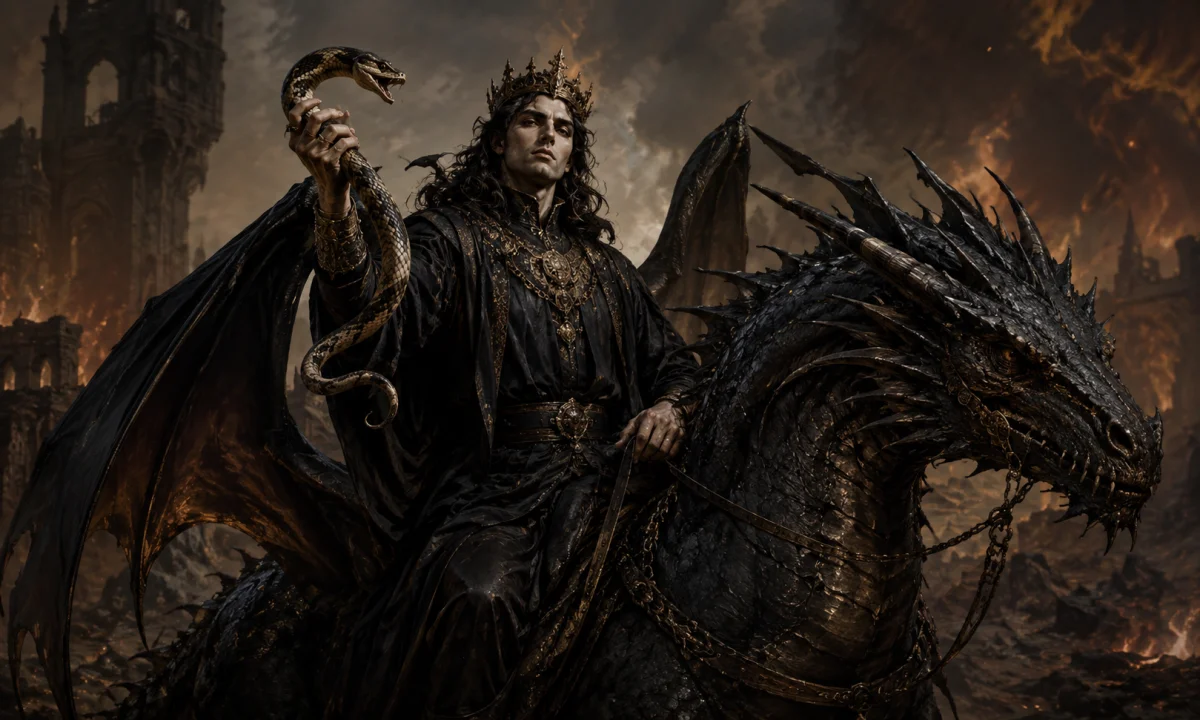
In the Ars Goetia, Astaroth appears in an unusual composite form. He is described as an angelic or human-like figure riding an infernal beast resembling a dragon and carrying a viper in his right hand. The exact visual details differ between editions and artistic representations, but the combination of an apparently dignified figure, a monstrous mount and a serpent-like creature is central to his later iconography.
Some versions emphasize a foul or dangerous breath. The magician is traditionally warned not to approach too closely and is instructed to use a protective magical device, commonly described as a ring, to guard against the spirit’s breath. This detail places Astaroth within a broader demonological pattern in which spirits are treated as powerful but hazardous beings who must be constrained through names, signs, circles and ritual authority.
Later illustrations often show Astaroth with features associated with several different infernal beings: wings, claws, a dragon, a serpent, a crown or formal robes. Not all of these features belong to the earliest descriptions. Artistic depictions frequently combine textual elements with the visual conventions of Christian devils and nineteenth-century occult imagery.
Rank, powers and role
Astaroth’s title as a duke reflects the hierarchical structure of European demonological catalogues. These works frequently assign spirits ranks such as king, prince, duke, marquis, president or earl. Such ranks do not necessarily represent a consistent supernatural government. Different catalogues may give the same spirit different offices, superior rulers or numbers of subordinate spirits.
In the Goetic tradition, Astaroth is associated with knowledge. He is said to answer questions about the past, present and future, reveal secrets and teach the liberal sciences. The medieval and early modern “liberal arts” referred to the learned disciplines traditionally regarded as suitable for a free person, including grammar, rhetoric, logic, arithmetic, geometry, music and astronomy. In practice, the phrase could also imply general scholarship or occult learning.
Astaroth is also described as explaining the fall of spirits. This makes him a particularly interesting figure in Christian demonology: he is not presented merely as a brute force or tempter, but as a speaking and instructive intelligence. His danger lies partly in the possibility that he can provide convincing knowledge while remaining morally corrupt or spiritually deceptive.
Some accounts attribute to him the ability to make a person learned or to disclose hidden matters. These powers fit a recurring literary type: the demon who offers forbidden knowledge. Such figures reflect Christian anxieties about divination, magic and intellectual curiosity outside approved religious authority. They also reflect the practical interests of magical texts, which often organize spirits according to the kinds of information or services they are believed to provide.
Relationships and variants
The relationship between Astaroth and other named demons is not consistent across demonological sources. In some versions of the Goetic tradition, he is placed within a hierarchy governed by a higher infernal monarch, but the names and arrangements can differ between manuscripts and editions. The spirit should not be assigned a single universally accepted set of allies, servants or family relationships.
Astaroth is sometimes linked with other demons whose names also derive from ancient deities or biblical references. Such associations are usually products of demonological classification rather than evidence that the ancient religions themselves recognized an infernal court. Early modern authors often assembled names from biblical passages, patristic writings, magical manuscripts and earlier catalogues, giving them new offices and relationships.
Some demonological lists also use forms such as Astarot or Astaroth. Spelling variation is common in texts copied by hand or translated between Hebrew, Greek, Latin, French and English. A different spelling does not automatically indicate a different being, but neither should every similarly named figure be assumed to have exactly the same history.
Astaroth and the ancient goddesses
Astaroth is most often confused with Astarte and Ashtoreth. The connection between these names is historically important, but the figures belong to different contexts.
- Astarte was an ancient Near Eastern goddess whose worship took different forms across the Levant and eastern Mediterranean.
- Ashtoreth is the biblical Hebrew form associated with a foreign goddess and with Israelite condemnation of non-Israelite worship.
- Astaroth is primarily the name of a demon in medieval and early modern Christian demonology.
It is also important not to confuse Astaroth with Ishtar, the Mesopotamian goddess, even though Astarte and Ishtar are related within the broader history of ancient Near Eastern religious traditions. These goddesses share some themes and may have influenced one another across cultures, but they were not interchangeable in every period or place. Nor should Astaroth be presented as an ancient goddess whose original worship can be reconstructed directly from the Goetic descriptions.
Symbolism and interpretation
Astaroth’s symbolic profile combines several themes. His serpentine and draconic imagery connects him with danger, hidden knowledge and the Christian symbolism of the tempter. His angelic appearance recalls the idea that demons may be fallen or deceptive spirits capable of presenting themselves attractively. His formal rank suggests a bureaucratic or courtly image of Hell, in which supernatural rebellion mirrors the institutions of earthly kingdoms.
His association with learning distinguishes him from demon figures defined mainly by violence or physical temptation. Astaroth represents the suspicion that knowledge can be obtained through improper means and that cleverness may become a route to spiritual pride. At the same time, the demonological texts that describe him are themselves learned works. They catalogue languages, names, ranks and ritual procedures, revealing a complicated mixture of fear, fascination and intellectual control.
From a historical perspective, Astaroth also illustrates how religious polemic can transform cultural memory. A revered or feared deity from an earlier religious system may later be classified as a demon by a rival tradition. This transformation does not preserve the earlier figure unchanged. Instead, it creates a new character whose identity carries traces of the old name while serving the theological and literary purposes of the later culture.
Later reception
Astaroth remained known through occult books, demonological compilations and dictionaries of supernatural beings. His image was especially shaped by the European revival of interest in magic and demonology during the nineteenth century. Writers and artists expanded the visual language surrounding him, sometimes combining the descriptions of older texts with general images of devils, dragons and fallen angels.
Modern occult writers may treat Astaroth as a distinct spirit for ritual or esoteric purposes, but these interpretations are modern religious or magical constructions rather than straightforward continuations of ancient Astarte worship. Some contemporary practitioners deliberately distinguish Astaroth from Astarte and Ashtoreth; others explore them as related aspects of a longer symbolic tradition. There is no single modern consensus.
Astaroth has also appeared in fantasy novels, role-playing games, comics, films, television and video games. Popular culture commonly presents the name as belonging to a powerful demon, sometimes portraying Astaroth as a warrior, ruler, summonable creature or major antagonist. These depictions often borrow the title, dragon, serpent or occult reputation while changing the character’s personality and abilities. They belong to modern fiction and should not be treated as evidence for the historical demonological tradition.
Historically, Astaroth is best understood as a layered figure: a demon of Christian European catalogues whose name recalls the ancient Near Eastern goddess Astarte through the biblical form Ashtoreth. The ancient goddess, the biblical polemical name and the early modern infernal duke are related by cultural history, but they are not the same figure.