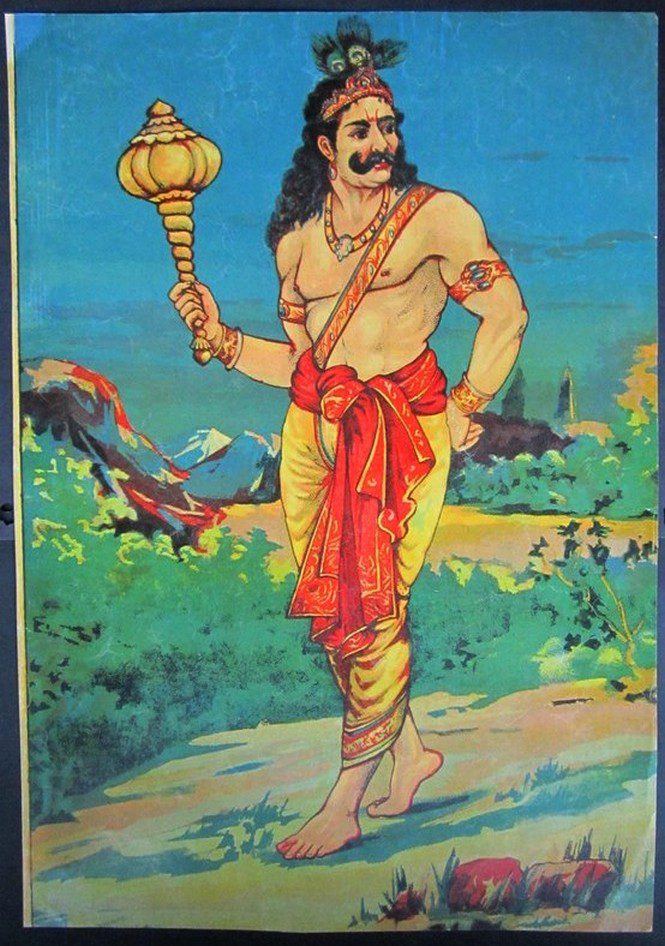
Bhima is one of the most celebrated characters in Hindu mythology, particularly in the epic poem known as the Mahabharata. He is one of the five Pandava brothers and is renowned for his immense strength, bravery, and loyalty. Bhima is often depicted as a towering figure, both physically and in his deeds. His story is filled with adventures, challenges, and moral dilemmas that reflect the complexities of human nature. As a central character, Bhima plays a crucial role in the events that lead to the great Kurukshetra War, making him an essential figure in the narrative.
Bhima’s Birth and Early Life
Bhima was born to Kunti, the daughter of King Shurasena, and the god of wind, Vayu. This divine parentage granted him extraordinary strength and resilience. His birth is often described as miraculous, as Kunti invoked Vayu to fulfill her desire for a powerful son. From a young age, Bhima exhibited his remarkable physical abilities, often outshining his brothers in strength and prowess. He was a source of pride for his mother and a figure of admiration among his peers. His early life was marked by various challenges, including the jealousy of his cousins, the Kauravas, who often sought to undermine him.
 Bhavani
As Bhima grew older, he became increasingly aware of his destiny and the role he would play in the epic saga of the Mahabharata. His childhood was filled with training in martial arts and archery, where he excelled, often besting his instructors. Bhima’s relationships with his brothers, especially Arjuna, were complex. While they shared a deep bond, Bhima’s strength sometimes overshadowed Arjuna’s skills, leading to a friendly rivalry. This dynamic set the stage for their future adventures and the trials they would face together.
Bhima and the Kauravas
The relationship between Bhima and the Kauravas, particularly Duryodhana, was fraught with tension. Duryodhana, the eldest of the Kauravas, harbored deep-seated jealousy towards Bhima due to his immense strength and valor. This jealousy often manifested in attempts to humiliate or harm Bhima. One of the most notable incidents occurred during a feast when Duryodhana attempted to poison Bhima. However, Bhima’s fortitude allowed him to survive, and he emerged even stronger. This incident further fueled the animosity between the Pandavas and the Kauravas, setting the stage for the inevitable conflict.
 Brighus
Bhima’s interactions with the Kauravas highlighted his role as a protector of his family. Despite the Kauravas’ hostility, Bhima maintained a sense of honor and loyalty to his brothers. He often acted as a shield for his family, ready to confront any threat posed by the Kauravas. This protective instinct was evident during various competitions and challenges where Bhima would defend his brothers against the Kauravas’ schemes. His unwavering loyalty made him a beloved figure among the Pandavas and their allies, further solidifying his position as a key player in the unfolding drama of the Mahabharata.
Bhima’s Role in the Game of Dice
One of the most pivotal moments in the Mahabharata is the infamous game of dice, where the Pandavas lost their kingdom and wealth to the Kauravas. Bhima’s reaction to this betrayal was one of intense anger and frustration. He could not comprehend how his brothers could allow themselves to be humiliated in such a manner. The game was rigged, and the Kauravas took advantage of the situation to undermine the Pandavas’ authority. Bhima’s fierce loyalty to his family drove him to vow revenge against the Kauravas for their deceitful actions.
During the game, Bhima’s anger boiled over, and he expressed his outrage openly. He could not bear the thought of his brothers being treated unfairly. This moment highlighted Bhima’s passionate nature and his commitment to justice. Despite the dire circumstances, Bhima’s spirit remained unbroken. He promised to regain what was lost and to avenge the humiliation of his family. This promise became a driving force for Bhima, propelling him into the subsequent events of the epic.
 Bharati
Bhima and His Allies
Throughout the Mahabharata, Bhima formed alliances with various characters who played significant roles in the story. One of his most notable allies was Krishna, who served as a charioteer and advisor to the Pandavas. Krishna recognized Bhima’s potential and often encouraged him to embrace his strength for the greater good. Their relationship was built on mutual respect and understanding, with Krishna guiding Bhima through the moral complexities of the impending war.
Bhima also formed a strong bond with his brothers, particularly Arjuna. Together, they complemented each other’s strengths and weaknesses. While Arjuna was known for his archery skills, Bhima’s physical prowess provided a balance within the group. This teamwork became crucial during the Kurukshetra War, where the Pandavas faced overwhelming odds against the Kauravas. Bhima’s alliances extended beyond his immediate family, as he also garnered support from various kingdoms and warriors who recognized the righteousness of the Pandavas’ cause.
The Kurukshetra War
The Kurukshetra War is the climax of the Mahabharata, and Bhima’s role in this epic battle is significant. He fought valiantly on the battlefield, showcasing his unmatched strength and combat skills. Bhima’s primary focus was to defeat the Kauravas, particularly Duryodhana, who had been a constant source of conflict and rivalry throughout their lives. Bhima’s ferocity in battle became legendary, as he single-handedly took on numerous adversaries, leaving a trail of defeated foes in his wake.
One of the most memorable moments during the war was Bhima’s duel with Duryodhana. The two warriors engaged in a fierce battle that symbolized the struggle between good and evil. Bhima’s strength and determination were put to the test as he fought not only for victory but also for the honor of his family. The clash between the two was not just a physical battle; it represented the culmination of years of rivalry and animosity. Bhima’s victory over Duryodhana became a turning point in the war, solidifying the Pandavas’ path to triumph.
Bhima’s Loyalty and Compassion
While Bhima is often remembered for his strength and combat abilities, his loyalty and compassion are equally important aspects of his character. He was deeply devoted to his family and friends, always prioritizing their well-being above his own. Bhima’s compassion was evident in his interactions with the common people and allies. He often extended his protection to those who were vulnerable, embodying the qualities of a true warrior.
Bhima’s loyalty also extended to his wife, Hidimbi, a forest-dwelling demoness who fell in love with him. Their relationship showcased Bhima’s ability to see beyond appearances and societal norms. Despite the initial obstacles, Bhima’s love for Hidimbi was unwavering, and he embraced her as an integral part of his life. This aspect of Bhima’s character highlights the importance of compassion and understanding in a world filled with conflict and strife.
Bhima in the Aftermath of the War
After the conclusion of the Kurukshetra War, Bhima faced the heavy burden of victory. The war resulted in immense loss and devastation, leaving him with a sense of sorrow for the lives lost, including those of his own relatives. Bhima’s strength was not just physical; it was also emotional. He struggled with the consequences of the war and the impact it had on the world around him. Bhima’s character evolved during this period as he grappled with the complexities of duty, honor, and the price of victory.
In the aftermath, Bhima became a protector of dharma, the moral order. He took it upon himself to ensure that justice was served and that the lessons learned from the war were not forgotten. Bhima’s journey did not end with the battle; instead, it transformed him into a wise leader who sought to rebuild and restore balance in the kingdom. His experiences during the war shaped his understanding of life and death, honor and betrayal, ultimately guiding him towards a path of righteousness.
Bhima’s Legacy in Hindu Mythology
Bhima’s legacy in Hindu mythology extends far beyond the pages of the Mahabharata. He is often celebrated as a symbol of strength, loyalty, and moral integrity. His character resonates with people who admire courage in the face of adversity. In various retellings and adaptations of the Mahabharata, Bhima’s exploits are highlighted, showcasing his importance in the cultural and spiritual fabric of Hinduism.
In addition to his physical prowess, Bhima is remembered for his profound sense of justice. His commitment to protecting his family and upholding dharma has inspired countless stories, poems, and artworks. Bhima’s character serves as a reminder of the complexities of human nature, illustrating that strength is not solely measured by physical ability but also by moral conviction and compassion for others.
Bhima in Contemporary Culture
Bhima’s influence can be seen in contemporary culture, where his character continues to inspire various forms of media, including literature, theater, and film. Modern adaptations of the Mahabharata often emphasize Bhima’s qualities, portraying him as a heroic figure who embodies the ideals of strength and righteousness. His story resonates with audiences who appreciate tales of bravery and loyalty, making him a timeless character in Hindu mythology.
Furthermore, Bhima’s character has become a source of inspiration for many, particularly in discussions about justice and moral dilemmas. His journey encourages individuals to reflect on their own values and the importance of standing up for what is right, even in the face of overwhelming odds. Bhima’s legacy serves as a reminder that true strength lies in the ability to protect and uplift others, making him a revered figure in both ancient and modern contexts.