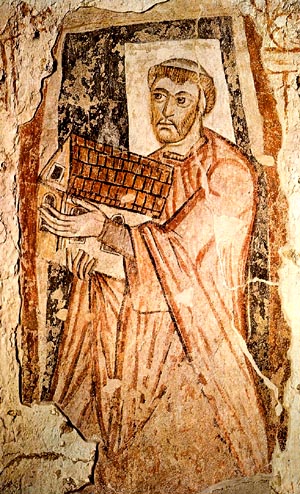
St. Benedict Biscop was a significant figure in early Christianity, particularly known for his contributions to the establishment of monasticism in England. Born in the year 628 in Northumbria, he was the son of a noble family. From a young age, he showed a deep interest in religion and spirituality. This inclination led him to pursue a life dedicated to God. Benedict Biscop’s journey into monastic life was marked by several pilgrimages to Rome, which greatly influenced his vision for monastic practices in his homeland. His dedication to the Christian faith and his desire to spread monastic traditions played a crucial role in shaping the future of monasticism in England.
Early Life and Background
Benedict Biscop’s early life was characterized by a blend of noble heritage and spiritual aspiration. Born into a family of high status, he had access to education and resources that many others did not. However, it was not wealth that defined his life but rather his spiritual quest. At the age of 25, he decided to leave behind his worldly possessions and pursue a monastic life. This decision was not taken lightly; it was a reflection of his deep commitment to Christianity. He chose to enter the monastic community of St. Peter in Wearmouth, which was one of the earliest Christian monasteries in England.
 St. Benedict
During his time at the monastery, Benedict Biscop learned about the rules and practices that governed monastic life. He was particularly influenced by the teachings of the Rule of St. Benedict, which emphasized community living, prayer, and work. This rule would later become a foundational text for many monastic communities across Europe. Benedict’s dedication to the monastic lifestyle was evident in his actions, as he sought to live according to the principles he had learned. His early years in the monastery laid the groundwork for his future endeavors in establishing and promoting monasticism.
Pilgrimages to Rome
One of the defining aspects of St. Benedict Biscop’s life was his numerous pilgrimages to Rome. His first journey to the Eternal City took place around the year 653. This pilgrimage was not merely a spiritual quest but also a mission to learn about the practices of the Roman Church. He was particularly interested in how the Roman monks lived and the liturgical practices they followed. These experiences in Rome had a profound impact on his understanding of monastic life. He observed the rituals, the way the monks prayed, and the overall organization of the monastic community.
During his time in Rome, Benedict Biscop was able to establish connections with important religious figures, including Pope Vitalian. These relationships would prove invaluable in his later efforts to reform and establish monasteries in England. After his initial visit, he returned to England with a wealth of knowledge and resources. He brought back not only ideas but also books and relics that would enrich the spiritual life of his community. His repeated journeys to Rome demonstrated his unwavering commitment to learning and his desire to bring the best practices of the Roman Church back to England.
 St. Bega
Founding Monasteries
Upon his return to England, St. Benedict Biscop focused on establishing monasteries that reflected the ideals he had encountered in Rome. In 674, he founded the Monastery of Wearmouth in Northumbria, which became a center for learning and spirituality. This monastery was unique in that it combined elements of the Roman and Celtic monastic traditions. Benedict Biscop’s vision was to create a place where monks could live in community, dedicate themselves to prayer, and engage in intellectual pursuits. The monastery quickly gained a reputation for its rigorous adherence to monastic rules and its commitment to education.
In addition to Wearmouth, Benedict Biscop also founded the Monastery of Jarrow in 682. This monastery was particularly significant because it became a center for scholarship and learning. Under Benedict’s leadership, Jarrow produced some of the most important intellectual works of the time. The most notable figure associated with Jarrow was the Venerable Bede, who would go on to become one of the most important historians of early Christianity. Benedict Biscop’s dedication to education and scholarship helped to foster a culture of learning that would have lasting impacts on the Church and society in England.
Influence on Christian Education
St. Benedict Biscop’s contributions to education cannot be overstated. He understood that for monasticism to thrive, there needed to be a strong emphasis on learning and scholarship. At both Wearmouth and Jarrow, he established schools where monks could study theology, scripture, and the liberal arts. This focus on education was revolutionary for the time and set a precedent for future monastic communities. His approach was holistic, integrating spiritual formation with academic pursuits. This was a significant shift from the previous focus on manual labor alone.
 St. Bede
The schools he established became centers of excellence, attracting students from various regions. Benedict Biscop ensured that the libraries were stocked with essential texts, many of which he had brought back from Rome. The monks were encouraged to read, reflect, and write. This emphasis on scholarship led to the production of numerous texts, including theological works, histories, and poetry. The intellectual legacy of these monasteries would influence not only the Church but also the broader culture of medieval England.
Liturgical Practices and Innovations
Another area where St. Benedict Biscop made significant contributions was in the development of liturgical practices. He recognized the importance of worship in the monastic life and sought to create a rich and meaningful liturgical experience for the monks. Drawing from his experiences in Rome, he introduced various elements of the Roman liturgy to the English context. This included the celebration of the Divine Office, which structured the daily prayers of the monks.
One of the most notable innovations was the introduction of the use of Gregorian Chant in the monasteries he founded. This form of plainchant became a staple of monastic worship and contributed to the spiritual atmosphere of the communities. The chants were not only beautiful but also served to enhance the prayer life of the monks. Benedict Biscop’s commitment to a rich liturgical life helped to shape the worship practices of the Church in England and laid the groundwork for future developments in Christian liturgy.
Legacy and Veneration
St. Benedict Biscop passed away on January 12, 689. His death marked the end of a remarkable life dedicated to God and the establishment of monasticism in England. His legacy lived on through the monasteries he founded and the scholars he inspired. The impact of his work can be seen in the flourishing of monastic communities throughout England and beyond. His emphasis on education, liturgical practices, and community living set a standard for future generations of monks.
Following his death, Benedict Biscop was venerated as a saint. His feast day is celebrated on January 12 each year, and he is remembered as one of the key figures in the development of Christian monasticism in England. The monasteries he established continued to thrive, producing scholars and saints who would further the mission of the Church. His influence can be seen in the writings of later theologians and historians, and he is often cited as a model for monastic leaders.
St. Benedict Biscop in Christian Mythology
In the context of Christian mythology, St. Benedict Biscop represents the ideal of a monastic leader who combines spirituality with scholarship. His life story is often told as an example of dedication and perseverance in the pursuit of holiness. The myths surrounding his life emphasize his connection to the divine and his role as a bridge between different monastic traditions. He is often portrayed as a visionary who saw the potential for monasticism to transform society.
Many legends have arisen about his life, including stories of miraculous events that occurred during his time. These stories often highlight his deep faith and unwavering commitment to God. The myths surrounding St. Benedict Biscop serve to inspire future generations of Christians to follow in his footsteps and embrace a life of service, learning, and devotion. His legacy continues to be a source of inspiration for those who seek to live a life dedicated to the principles of monasticism.
St. Benedict Biscop’s life and work are a testament to the power of faith and the impact one individual can have on the course of history. His contributions to monasticism, education, and liturgical practices have left an indelible mark on the Christian tradition. As we reflect on his life, we are reminded of the importance of community, learning, and worship in our own spiritual journeys. St. Benedict Biscop stands as a shining example of what it means to live a life fully dedicated to God and the service of others.