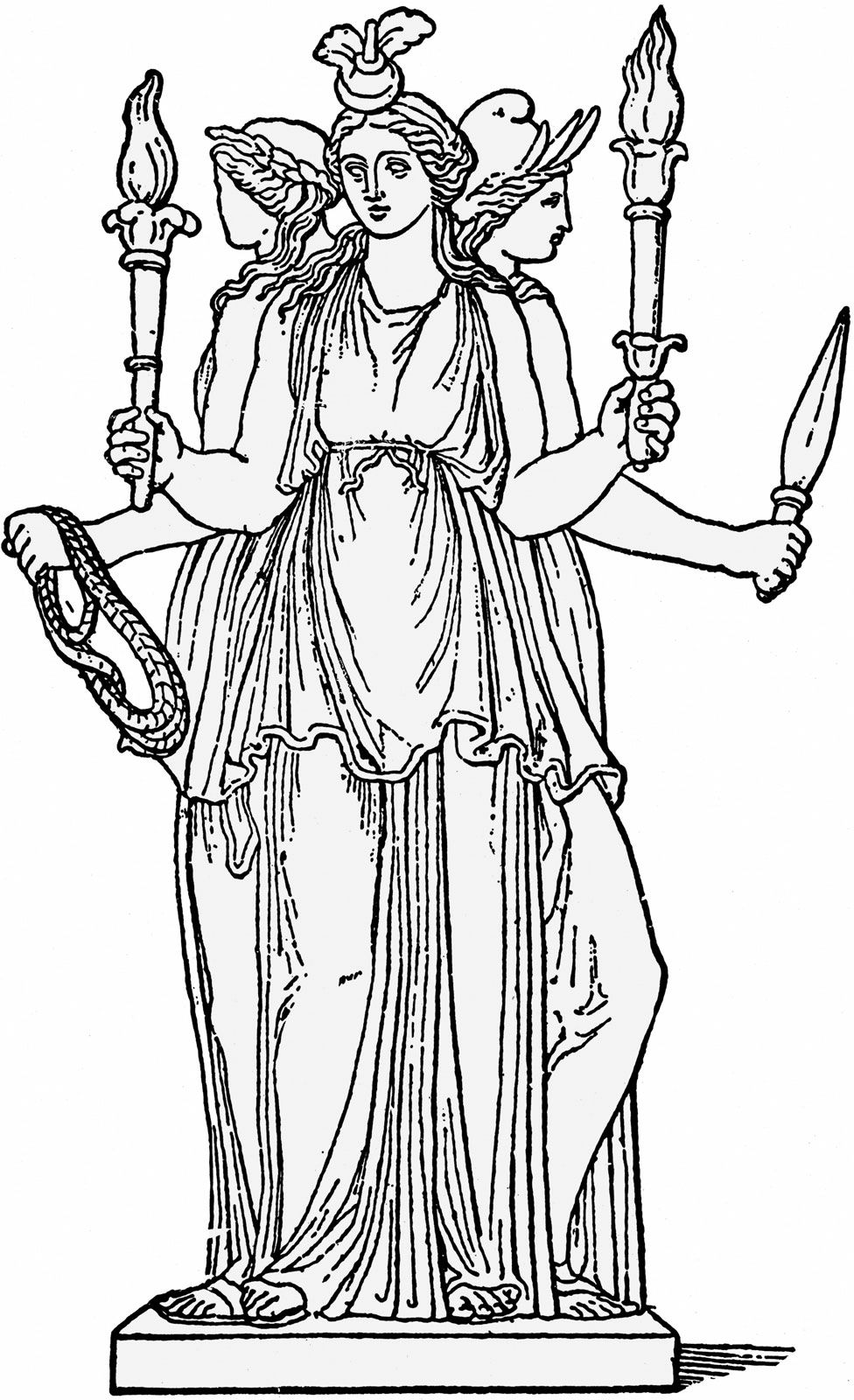
Hecate is a fascinating figure in Greek mythology, often associated with magic, witchcraft, and the moon. She is known for her mysterious nature and her ability to traverse between the worlds of the living and the dead. Hecate’s character embodies a complex blend of various attributes, making her a significant figure in ancient tales and modern interpretations alike. As a goddess, she is often depicted as a protective figure, guiding individuals through dark times and helping them find their way in life. Her connection to the supernatural has made her a symbol of empowerment for many.
Origins of Hecate
The origins of Hecate can be traced back to ancient times, where she was worshipped primarily in Thrace and Asia Minor. Some scholars believe that she may have originated from earlier pre-Greek deities associated with the earth and the moon. Her name is often linked to the Greek word “hekatos,” which means “to work one’s will” or “to bring to light.” This etymology reflects her role as a powerful figure capable of influencing both the natural and supernatural worlds.
 Hecatonchires
In the early literary sources, Hecate is portrayed as a goddess of the night and a guardian of the crossroads. The Homeric Hymn to Demeter mentions her as a helper to Demeter in her search for her daughter Persephone. This connection highlights Hecate’s role as a guide during times of loss and transformation. As the mythology evolved, her attributes expanded, and she became associated with witchcraft, sorcery, and the underworld.
Symbolism and Attributes
Hecate is often depicted with three heads or three bodies, representing her ability to see in all directions and her dominion over the past, present, and future. This triadic form emphasizes her role as a guardian of the thresholds, both literal and metaphorical. She is also associated with dogs, particularly black dogs, which are often seen as symbols of the underworld and guides for souls. In ancient rituals, offerings of food and drink were made to Hecate, particularly at the crossroads where she was believed to dwell.
Another significant aspect of Hecate’s symbolism is her connection to the moon. She is often depicted holding torches or a key, which symbolizes her role as a guide through the darkness. The torches illuminate the path for those who seek her help, while the key represents her ability to unlock the mysteries of life and death. Hecate is also associated with various plants and herbs, particularly those used in magic and healing, further solidifying her connection to the mystical arts.
 Helen
HelenHecate in Literature
Throughout history, Hecate has appeared in various literary works, reflecting her complex character and multifaceted nature. One of the most famous references to Hecate is in Shakespeare’s play, “Macbeth.” In this tragedy, she is portrayed as the goddess of witchcraft, guiding the three witches in their dark machinations. Her presence adds an element of supernatural intrigue and highlights her association with fate and destiny.
In addition to Shakespeare, Hecate has also been featured in the works of many poets and authors. For instance, in Hesiod’s “Theogony,” she is described as a powerful and revered goddess, one who has been granted dominion over the earth, sea, and sky. This portrayal emphasizes her importance within the pantheon of Greek deities and her ability to influence various aspects of life.
Worship and Rituals
The worship of Hecate was prevalent in ancient Greece, particularly in the form of rituals and offerings at crossroads. These locations were seen as sacred spaces where the boundaries between the worlds of the living and the dead were thin. Devotees would often leave offerings of food, wine, and incense to honor her and seek her guidance. During the full moon, rituals dedicated to Hecate would be performed, invoking her power and seeking her blessings.
 Heliades
One of the most notable festivals dedicated to Hecate was the Hecate’s Night, celebrated on the night of the full moon. During this time, people would light candles and torches, creating a path for Hecate to follow. It was believed that she would bless those who honored her and provide protection against malevolent spirits. The rituals often included chanting, dancing, and the recitation of spells, emphasizing her association with magic and the supernatural.
Hecate in Modern Culture
In modern times, Hecate has experienced a resurgence in popularity, particularly within the context of paganism and witchcraft. Many contemporary practitioners of magic view her as a powerful ally and a source of wisdom. Hecate’s attributes of transformation and guidance resonate with those seeking to navigate their personal journeys and challenges. As a result, she has become a symbol of empowerment for many individuals exploring their spiritual paths.
Various books, films, and television shows have also featured Hecate, often portraying her as a strong and enigmatic character. Her influence can be seen in popular media, where she is often depicted as a wise and powerful figure who assists protagonists in their quests. This modern interpretation reflects society’s ongoing fascination with the mystical and the unknown, as well as a growing interest in the ancient practices of magic and witchcraft.
Hecate and Feminism
Hecate’s role in mythology has been embraced by many feminists as a symbol of female empowerment. Her strength, independence, and connection to the supernatural make her an ideal figure for those advocating for women’s rights and equality. Hecate’s ability to navigate the realms of life and death serves as a metaphor for the challenges women face in society. Many see her as a representation of the power that women can harness to reclaim their identities and assert their autonomy.
Moreover, the modern interpretation of Hecate has led to the creation of various feminist spiritual practices that honor her legacy. These practices often emphasize the importance of female intuition, wisdom, and strength. Rituals dedicated to Hecate are designed to empower women, allowing them to connect with their inner selves and embrace their unique abilities. In this way, Hecate continues to inspire and empower individuals seeking to challenge societal norms and embrace their true selves.
Artistic Representations of Hecate
Hecate has been a popular subject in art throughout the centuries, inspiring countless artists to capture her essence in various forms. From ancient sculptures to modern paintings, her image has evolved while maintaining the core attributes associated with her character. Artists often depict her with her characteristic symbols, such as the torches, keys, and dogs, emphasizing her role as a guide and protector.
In the Renaissance, Hecate was often portrayed in works that explored themes of magic and the occult. Artists like Giovanni Battista Tiepolo and Henry Fuseli created striking images that highlighted her mysterious nature and connection to the supernatural. These representations reflect society’s fascination with the mystical and the unknown, as well as the ongoing exploration of themes related to power and femininity.
Hecate is a multifaceted figure whose influence spans from ancient Greece to modern times. Her complex character, rich symbolism, and enduring legacy continue to captivate individuals across cultures and generations. Whether viewed as a goddess of magic, a protector of the crossroads, or a symbol of female empowerment, Hecate remains a powerful and significant figure in both mythology and contemporary spirituality.