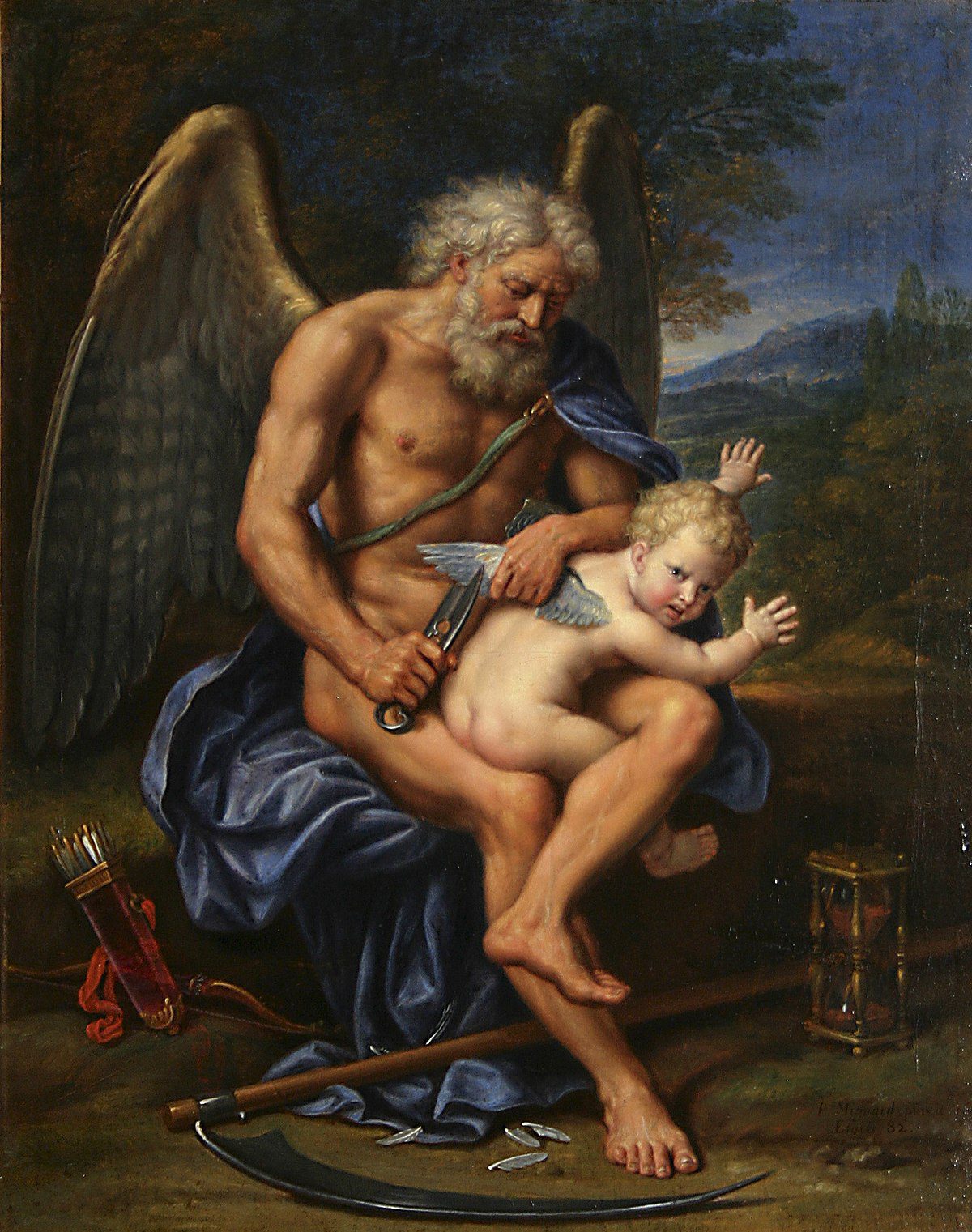
In Greek mythology, Chronos is often associated with time and the concept of time as a continuum. He is frequently depicted as a personification of time itself, representing the relentless march of time and its inevitable effects on all things. Unlike the more well-known god Kronos, who is often confused with Chronos, the two figures have distinct roles and attributes in mythology. Chronos is a primordial being, a force that governs the passage of time, while Kronos is a Titan who is known for his rule over the golden age and his eventual downfall due to his fear of being overthrown by his children.
The Origins of Chronos
The origins of Chronos can be traced back to the early cosmogonies of Greek mythology. In some accounts, he emerges from the void, known as Chaos, representing the first element of creation. As the universe began to take shape, Chronos became a fundamental force that organized the cosmos. This depiction emphasizes his role as a creator and maintainer of order, as he oversees the cycles of day and night, the seasons, and the aging of all living beings. Chronos is sometimes described as a serpentine figure, coiling around the world, symbolizing the cyclical nature of time.
 Chthonia
In various myths, Chronos is often linked to the concept of eternity. His existence transcends the boundaries of mortal understanding, representing a time that is infinite and unchangeable. This aspect of Chronos makes him a significant figure in philosophical discussions about the nature of time, existence, and the universe. His portrayal as an ancient being adds to the mystery surrounding him, as he embodies both the beginning and the end of all things.
Chronos vs. Kronos
One of the most common misconceptions in Greek mythology is the confusion between Chronos and Kronos. While their names sound similar, their stories and significances are quite different. Kronos is known as the leader of the Titans and is often associated with the harvest, represented by the sickle he wields. He is infamous for devouring his children to prevent a prophecy that foretold his downfall at their hands. This act of cannibalism marks him as a tragic figure, consumed by his fear of losing power.
 Circe
CirceOn the other hand, Chronos does not engage in such violent acts. Instead, he embodies the concept of time itself, highlighting the inevitability of change and the passage of life. While Kronos is a figure of destruction and fear, Chronos symbolizes the continuous flow of time, reminding us that everything is subject to change and decay. This distinction is essential in understanding their roles within Greek mythology and the lessons they impart.
The Representation of Chronos in Art
In ancient art, Chronos is often depicted in various forms, reflecting his association with time. He is sometimes shown as an elderly man with a long beard, symbolizing wisdom and the passage of time. In other representations, he appears as a more abstract figure, often accompanied by symbols like the hourglass or the clock, emphasizing his connection to the measurement of time. These artistic interpretations serve to convey the dual nature of Chronos as both a nurturing and destructive force.
One of the most famous representations of Chronos can be found in the painting “Allegory of Time” by the artist Giovanni Battista Tiepolo. In this artwork, Chronos is depicted as a powerful figure, holding a scythe, a symbol often associated with death and the end of life. This portrayal underscores the idea that time, while essential for growth and life, also brings decay and death. Such representations invite viewers to reflect on the transient nature of existence and the importance of making the most of the time we have.
 Clio
ClioChronos in Philosophy
The concept of Chronos has also influenced philosophical discussions about time. Ancient philosophers like Heraclitus and Aristotle grappled with the nature of time, its passage, and its impact on existence. Heraclitus famously stated that “everything flows,” emphasizing the idea that change is constant and inevitable. This idea aligns closely with the essence of Chronos, as he embodies the relentless flow of time that shapes our experiences and realities.
Aristotle, on the other hand, approached time from a different angle. He described time as a measure of change, suggesting that it cannot exist without change occurring. This perspective resonates with Chronos, as he is the force that governs the cycles of life, marking the transitions between different states of being. Philosophers continue to explore the implications of Chronos in modern discussions, examining how our perception of time influences our understanding of existence, morality, and the human experience.
Chronos in Literature
Chronos has also made appearances in various literary works throughout history. In ancient texts, he is often referenced in relation to the themes of fate and destiny. The idea that time is an unstoppable force that shapes our lives is a recurring motif in literature, with Chronos serving as a symbol of this inevitability. Writers have drawn upon the imagery of Chronos to illustrate the passage of time and its impact on human experiences, relationships, and aspirations.
In modern literature, the character of Chronos continues to inspire authors and poets. His representation as a wise yet relentless force invites contemplation on the nature of time and its effects on human lives. Many contemporary works explore the tension between the desire to control time and the acceptance of its passage. This ongoing fascination with Chronos reflects humanity’s struggle to understand and navigate the complexities of time, mortality, and existence.
The Cultural Impact of Chronos
The influence of Chronos extends beyond mythology and literature; it permeates various aspects of culture. In many societies, the passage of time is marked by rituals and celebrations that acknowledge the cycles of life. Festivals that celebrate the changing seasons often reflect the influence of Chronos, as communities come together to honor the continuity of life and the inevitable passage of time. These cultural practices serve as reminders of the importance of cherishing each moment and recognizing the transient nature of existence.
Moreover, Chronos has inspired various philosophical movements that explore the relationship between humanity and time. The concept of Zeitgeist, or the spirit of the times, draws upon the idea that each era is shaped by the collective experiences and perceptions of time. This notion emphasizes how Chronos influences not only individual lives but also the broader cultural and historical context in which we exist. As societies evolve, their understanding of time and its significance continues to be shaped by the enduring presence of Chronos.
Chronos in Modern Interpretations
In contemporary society, the figure of Chronos has taken on new meanings. With the advent of technology and the fast-paced nature of modern life, the perception of time has shifted dramatically. Many people feel a constant pressure to manage their time effectively, leading to discussions about the importance of mindfulness and living in the present moment. This contemporary focus on time management can be seen as a response to the relentless nature of Chronos, as individuals seek to reclaim control over their lives in an ever-accelerating world.
Additionally, the concept of time travel, popularized in literature and film, often draws upon the myth of Chronos. Stories that explore the possibility of moving through time raise questions about the nature of existence, free will, and the consequences of altering the past or future. These narratives reflect humanity’s ongoing fascination with time and its complexities, echoing the themes associated with Chronos in ancient mythology.
The Legacy of Chronos
Chronos continues to hold a significant place in the collective imagination, serving as a reminder of the profound impact of time on our lives. His legacy can be seen in various cultural expressions, from art and literature to philosophy and modern media. As we navigate the complexities of existence, the figure of Chronos encourages us to reflect on our relationship with time and the inevitability of change.
Furthermore, the lessons associated with Chronos resonate deeply in our daily lives. The awareness of time’s passage invites us to cherish our experiences, relationships, and the fleeting moments that shape our existence. In a world where distractions abound, the figure of Chronos serves as a poignant reminder to pause, reflect, and appreciate the beauty of the present moment.