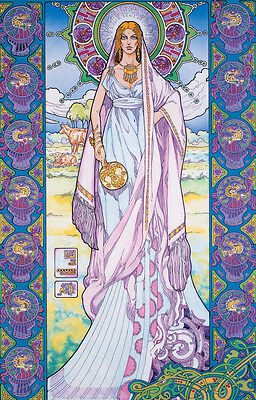
The story of Bóann is a significant part of Irish mythology, showcasing the intricate connections between deities, nature, and the landscape of Ireland. Bóann is often associated with the River Boyne, which is named after her. This river is not only a physical landmark but also a symbol of life and fertility in Irish culture. The myths surrounding Bóann highlight her role as a goddess of the river and the mysteries that come with water, such as transformation and the passage of time.

Origins of Bóann
Bóann’s origins can be traced back to ancient Celtic beliefs. She is considered one of the Tuatha Dé Danann, a race of supernatural beings in Irish mythology. These beings are often depicted as gods and goddesses who possess extraordinary powers and are deeply connected to the natural world. Bóann is particularly linked to fertility and the nurturing aspects of nature, making her a vital figure in the agricultural society of ancient Ireland.
In various tales, Bóann is described as the daughter of Breasal, the king of the Tuatha Dé Danann, or sometimes as a member of the Fomorians, another group of mythological beings. The differences in her lineage highlight the complexity of Irish myths and how stories can vary from one source to another. Regardless of her origins, Bóann is revered as a powerful goddess, embodying the essence of life-giving water and the cycles of nature.
The Legend of Bóann
The most famous legend surrounding Bóann involves her relationship with the Well of Segais. This well is said to be a source of great wisdom and inspiration. In the myth, Bóann approaches the well, eager to partake in its magical waters. However, the well is guarded by a series of powerful enchantments. Ignoring the warnings, Bóann steps forward to drink from the well, which causes a dramatic transformation in her life.
 Biróg
BirógAs she drinks from the well, the waters surge and create a powerful current. This current engulfs Bóann, and she is swept away, transforming her into the embodiment of the river itself. This transformation signifies not only her connection to water but also her acceptance of the cycles of life and death. The story illustrates how the goddess of the river must face the consequences of her actions, reflecting the natural balance that exists in the world.
Bóann and the River Boyne
The River Boyne is perhaps the most enduring symbol of Bóann’s legacy. Flowing through the heart of Ireland, the river has been a vital source of sustenance and inspiration for generations. In many ways, the river serves as a reflection of Bóann herself—nurturing, life-giving, and constantly flowing. The Boyne is also associated with various ancient sites, including the famous passage tombs of Newgrange and Knowth, which are rich in history and mythology.
The river’s significance extends beyond its physical presence. It is often viewed as a boundary between the earthly realm and the otherworld, a common theme in Irish mythology. Bóann, as the goddess of the Boyne, serves as a bridge between these two worlds, guiding souls and providing nourishment to the land. The river, in many stories, becomes a metaphor for life’s journey, flowing continuously and shaping the landscape as it moves.
 Benandonner
The Symbolism of Bóann
Bóann embodies several key symbols in Irish mythology. One of the most prominent is the concept of fertility. As a goddess associated with water, Bóann represents the life-giving properties of rivers and streams. Water is essential for agriculture, and Bóann’s connection to fertility underscores the importance of nature in sustaining human life. In this sense, she is seen as a nurturing figure, providing the resources necessary for growth and prosperity.
Additionally, Bóann symbolizes transformation and the passage of time. Her story illustrates how actions can lead to significant changes, both in the individual and in the world around them. The flowing nature of the river mirrors the continuous cycle of life, where beginnings and endings are intertwined. This duality is a recurring theme in Irish mythology, emphasizing the interconnectedness of all things.
Bóann in Modern Culture
Today, Bóann’s legacy continues to influence Irish culture and literature. Many contemporary artists, writers, and musicians draw inspiration from her story, weaving elements of her mythology into their works. The River Boyne remains a significant location for cultural events, and its beauty attracts visitors from around the world. The river serves as a reminder of the rich tapestry of Irish folklore and the enduring impact of its deities.
Furthermore, Bóann’s story is often explored in discussions about nature and environmentalism. Her connection to water and fertility resonates with modern concerns about sustainability and the importance of preserving natural resources. In this way, Bóann transcends her mythological roots, becoming a symbol for contemporary movements aimed at protecting the environment and recognizing the sacredness of nature.
Festivals and Celebrations
In ancient Ireland, festivals celebrating Bóann and the River Boyne were common, particularly during the spring and summer months. These celebrations often revolved around themes of fertility, growth, and the abundance of nature. Communities would gather to honor the goddess, offering prayers and rituals to ensure a bountiful harvest. Such festivals served not only as religious observances but also as vital social gatherings that strengthened community bonds.
- Spring Equinox: Celebrations during this time often included rituals to honor Bóann, acknowledging the rebirth of nature and the fertility of the land.
- Summer Solstice: This festival marked the peak of growth, with communities participating in feasts and offerings to the goddess.
- Harvest Festivals: As the harvest season approached, people would express gratitude to Bóann for her blessings and abundance.
These festivals provided an opportunity for storytelling, where the myths of Bóann and other deities were shared. Through songs, dances, and communal activities, the legends were passed down through generations, ensuring that the rich cultural heritage of Ireland remained alive. The celebrations served as a reminder of the interconnectedness of life, nature, and spirituality.
Connections to Other Deities
Bóann is often linked to other deities within the Tuatha Dé Danann pantheon. Her relationships with figures such as Brigid, the goddess of fertility and healing, and Lugh, the god of the sun and craftsmanship, illustrate the interconnected nature of these mythological beings. Each deity embodies different aspects of life, yet they often work together to maintain the balance of the natural world.
Brigid, like Bóann, is associated with fertility and the land. Their shared attributes highlight the importance of both water and earth in sustaining life. The stories of these goddesses often intertwine, with Bóann representing the nourishing qualities of water and Brigid symbolizing the fertility of the soil. Together, they embody the harmony necessary for growth and prosperity.
Influence on Literature and Art
Bóann’s influence extends beyond mythology into the realms of literature and art. Writers have long drawn inspiration from her story, incorporating themes of nature, transformation, and the divine feminine into their works. Her character often represents the duality of life—the nurturing aspects of motherhood juxtaposed with the unpredictable forces of nature.
Artists have also captured the essence of Bóann through various forms of expression. Paintings, sculptures, and modern digital art often depict her as a symbol of beauty and grace, embodying the flowing waters of the River Boyne. These artistic representations serve to keep her memory alive, reminding contemporary audiences of the rich cultural heritage that Bóann represents.
Bóann’s story, deeply rooted in Irish mythology, offers valuable insights into the relationship between nature, spirituality, and community. Her connection to the River Boyne serves as a powerful reminder of the life-giving properties of water and the importance of nurturing the earth. As a goddess of fertility and transformation, Bóann embodies the cycles of life that continue to resonate with people today. Through festivals, literature, and art, her legacy endures, inspiring future generations to honor the natural world and the myths that shape their culture.