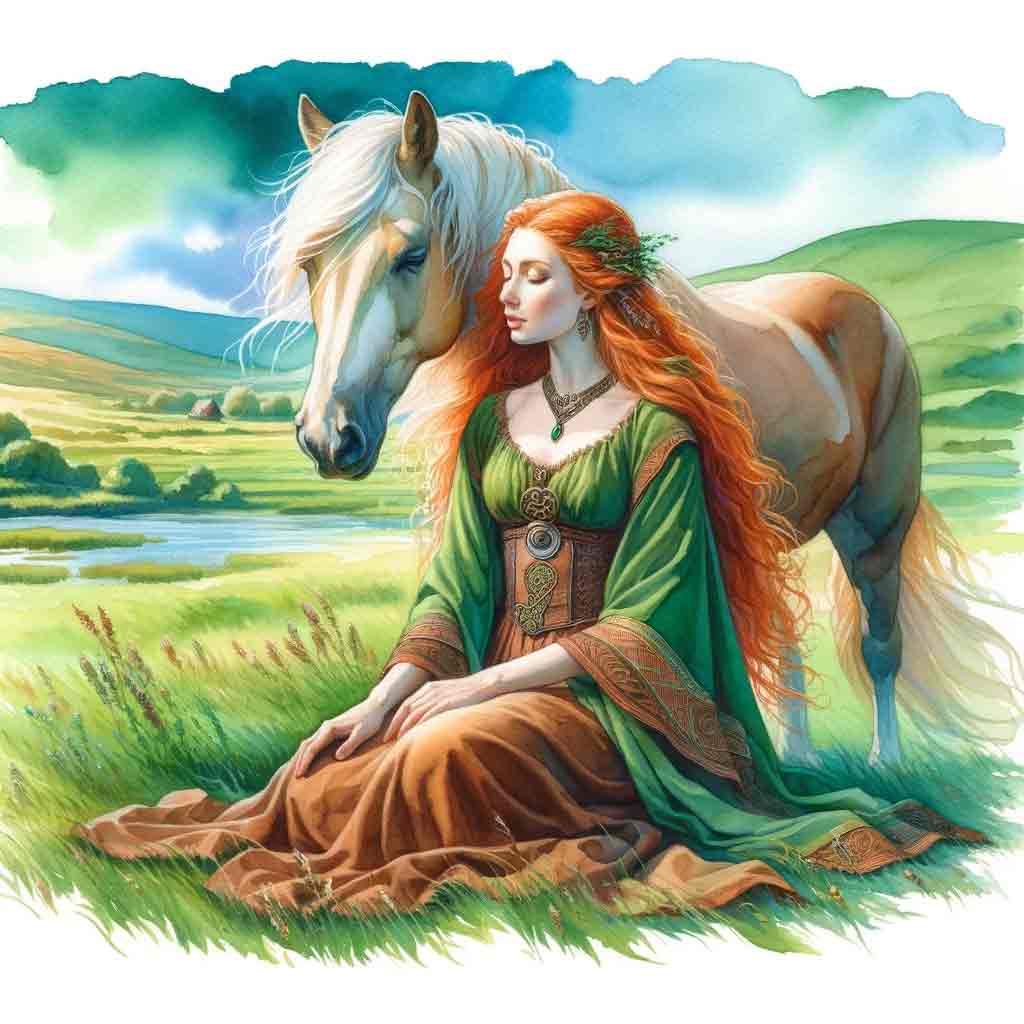
Epona is a fascinating figure in Gaulish mythology, often associated with horses and fertility. She is revered as a goddess who protects horses, riders, and all those who depend on these magnificent creatures. Epona’s name is derived from the Gaulish word for “horse,” and she is frequently depicted riding a horse or accompanied by one. Her presence in ancient cultures, especially among the Celts, highlights the significance of horses in their daily lives and rituals.
The Origins of Epona
The origins of Epona can be traced back to the ancient Celtic tribes that inhabited what is now modern-day France and parts of the British Isles. The Celts had a deep respect for horses, which played a crucial role in their society, both as a mode of transportation and as a symbol of power and prestige. Epona emerged as a deity who embodied these qualities, serving as a protector and guardian of horses. Her worship was not limited to the Gauls; she was also honored by the Romans, who adopted her into their pantheon.
 Sirona
Evidence of Epona’s worship can be found in various archaeological sites across Europe. Statues, inscriptions, and altars dedicated to her have been discovered in places such as France, Germany, and Britain. These artifacts often depict her with horses, emphasizing her close relationship with these animals. The Romans, in particular, integrated Epona into their religious practices, celebrating her with festivals and dedicating temples to her. This cross-cultural exchange illustrates the importance of Epona beyond the Gaulish tribes.
Epona’s Symbolism
Epona symbolizes not only the physical aspects of horses but also the spiritual connection between humans and these animals. In Celtic culture, horses were seen as sacred beings, often associated with the Otherworld, a realm of the dead and divine. Epona’s role as a protector of horses signifies her guardianship over this connection, ensuring safe passage for riders in both the physical and spiritual realms. Her imagery often includes symbols of fertility and abundance, reinforcing her association with life and growth.
- Horses as symbols of power
- The spiritual connection between humans and horses
- Fertility and abundance in Epona’s worship
Additionally, Epona is sometimes linked to the concept of healing. In many cultures, horses are believed to possess healing powers, and Epona’s connection to these animals may extend to providing comfort and restoration to those who seek her favor. This aspect of her mythology highlights the dual nature of her guardianship: protecting both the physical well-being of horses and the emotional and spiritual well-being of their riders.
 Damona
Epona in Art and Literature
Epona’s presence in art and literature is significant, showcasing her importance in ancient cultures. Numerous depictions of Epona can be found in sculptures, pottery, and other forms of artistic expression. These representations often highlight her riding a horse, symbolizing her mastery and control over these animals. The style and details of these artworks vary across regions, reflecting the local interpretations and reverence for the goddess.
In Roman literature, Epona is frequently mentioned in texts that discuss the roles of gods and goddesses. She is often associated with the goddess of victory, Nike, illustrating her role in ensuring success in battle and other endeavors. This literary connection emphasizes her multifaceted nature, as she is not only a goddess of horses but also a symbol of triumph and strength.
 Cernunnos
The Cult of Epona
The cult of Epona was widespread, particularly in regions where horses were integral to daily life. Her worship involved various rituals and offerings, which were aimed at securing her favor. Devotees would often leave offerings of grain, fruits, or even small figurines representing horses at her shrines. These acts of devotion reflect the deep respect and admiration the Celts had for Epona and her role in their lives.
Festivals dedicated to Epona were celebrated with great enthusiasm, often involving horse races and other equestrian events. These festivities served not only as a tribute to the goddess but also as a way to strengthen community bonds. Participants would gather to celebrate their shared love for horses and the protection Epona provided. Such events were crucial in maintaining the cultural significance of Epona and ensuring that her legacy continued through generations.
Epona and the Roman Empire
As the Roman Empire expanded, so did the worship of Epona. The Romans adopted her into their pantheon, recognizing her importance among the Celtic tribes. This integration allowed for a unique blending of cultures, as Epona became associated with Roman deities such as Fortuna and the goddess of agriculture, Ceres. The Romans often depicted Epona with a cornucopia, symbolizing her role in providing abundance and prosperity.
Roman inscriptions dedicated to Epona reveal the goddess’s widespread veneration across the empire. Soldiers, merchants, and farmers alike sought her protection and blessings. This broad appeal highlights Epona’s adaptability as a deity, capable of resonating with diverse groups of people. The Roman adoption of Epona not only reflects the interconnectedness of ancient cultures but also underscores the enduring legacy of this remarkable goddess.
The Legacy of Epona
The legacy of Epona continues to influence modern culture, particularly in equestrian circles. Many riders and horse enthusiasts still invoke her name, seeking her blessings for safety and success in their endeavors. Epona has become a symbol of the deep bond between humans and horses, reminding us of the importance of these majestic creatures in our lives. Her image can be found in various forms, from jewelry to art, serving as a tribute to her enduring presence.
In contemporary spirituality, Epona is often associated with earth-based religions and practices that honor the natural world. Many neopagan groups incorporate her into their rituals, celebrating her as a goddess of nature and fertility. This modern interpretation of Epona emphasizes her role as a protector of animals and the environment, showcasing her relevance in today’s world.
Epona in Popular Culture
Epona’s influence extends beyond mythology and spirituality into popular culture. She has appeared in various forms of media, including video games, literature, and films. One of the most notable representations of Epona is in the video game series “The Legend of Zelda,” where she is depicted as Link’s loyal horse. This portrayal has introduced Epona to a new generation of fans, further solidifying her place in modern mythology.
Additionally, Epona’s image is often used in artistic expressions, such as paintings and sculptures, that celebrate her connection to horses. These artworks serve as a reminder of the rich tapestry of Gaulish mythology and the timeless bond between humans and horses. As Epona continues to inspire artists and creators, her legacy remains vibrant and relevant in contemporary culture.
Epona stands as a testament to the enduring power of mythology and the deep-rooted connections between humans and horses. Her legacy, rich in symbolism and cultural significance, continues to inspire and resonate with people across generations. From ancient worship practices to modern representations, Epona remains a beloved figure in the tapestry of Gaulish mythology.